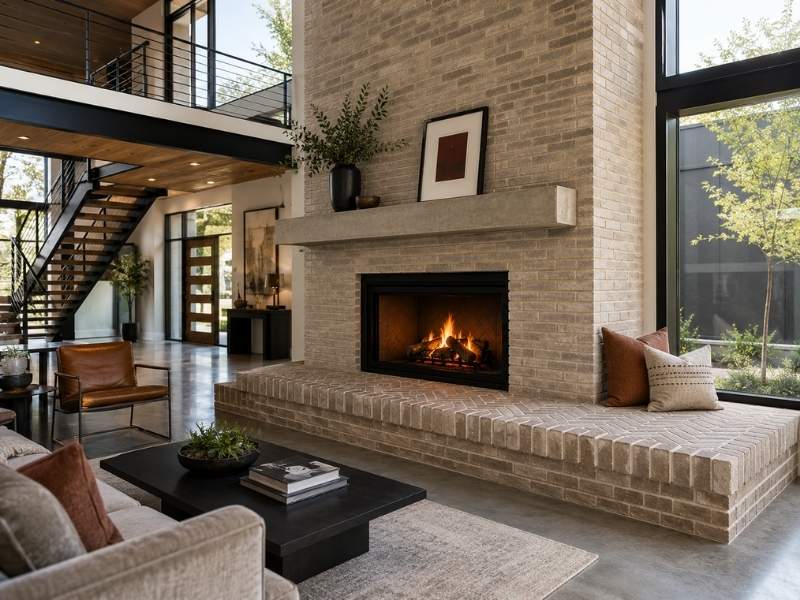
A brick hearth does two jobs at once. It has to look good enough to anchor a room. It also has to hold up to real heat and daily use without cracking or fading. The best brick hearth designs never make you choose between the two.
A Hearth Has to Earn Its Place in the Room
A hearth sits at the center of a room, whether that room gets used every day or just on cold nights. Brick brings texture and warmth other materials can’t match. But it only works if the design fits how the space actually gets used.
A hearth that looks great in photos but scorches easily or collects soot in the wrong spots turns into a headache fast. Good brick hearth design starts with function first. The style choices get built on top of that solid base.
A well planned hearth also fits the room’s daily rhythm. Some hearths need to double as extra seating during a party. Others just need to look sharp behind a quiet fireplace on a cold night. Either way, the plan should start with how people will use the space.
Classic Brick Patterns That Never Go Out of Style
Classic brick patterns have stayed popular for a reason. Running bond, herringbone, and basket weave patterns each bring a different kind of texture to a hearth. Each one has proven itself over decades of use. These patterns mix visual interest with a surface that’s easy to clean.
A classic pattern also tends to age well. Trends in tile and stone can look dated within a decade. A well laid brick hearth with a traditional pattern still looks right years later. That staying power matters for a feature that isn’t cheap or easy to redo.
Hearths Built to Handle Real Heat and Daily Use
A hearth built for style but not for heat rarely lasts. Brick near an active fireplace has to handle real heat swings, day after day, without cracking or losing its color. That means picking the right brick type and the right mortar, not just what matches the room.
Fire-rated brick and heat-resistant mortar cost more up front. But they hold up where plain materials fail. A hearth that cracks after a few winters of use ends up costing more in repairs than picking the right materials would have cost at the start.
Daily use matters too, not just fire heat. A hearth gets walked past, leaned against, and sometimes used as extra seating. The brick and the joints between them need to handle that wear without chipping or wearing down at the edges.
Matching a New Hearth to a Home’s Existing Character
A new hearth rarely gets built on its own. It has to sit inside a home that already has its own look, whether that home is decades old or built last year. Hearth upgrades work best when they respect that existing look instead of fighting against it.
Older homes often call for a hearth that echoes the brick or stonework already in the house, like a matching color tone or a similar pattern. Newer homes have more room to try a fresh look. But even then, a hearth that feels totally cut off from the rest of the space rarely looks right.
This balance between old and new is part of what makes brick such a flexible material for a hearth. It can lean classic in an older home. It can also take on a cleaner, more modern shape in a newer build. Either way, it keeps the same tough core.
A hearth doesn’t have to match every detail of a home to feel right. It just has to speak the same visual language. A slightly warmer brick tone or a familiar pattern is often enough to tie a new hearth to a home built decades earlier.
Small Design Details That Make a Hearth Feel Custom
The details separate a good hearth from a forgettable one. A slightly raised hearth platform changes how a fireplace feels in a room. It gives the space more presence without needing a large footprint. A clean brick edge, cut and finished well, makes the whole feature look custom.
Small choices, like how the mortar joints get finished or how the brick wraps around a corner, add up fast. None of these details cost much extra on their own. But together, they turn a basic hearth into one that looks built just for the room it sits in.
Lighting plays a role too, even though it isn’t part of the brickwork itself. A small light aimed at the hearth can bring out the brick’s texture at night. It adds depth to a feature that might otherwise blend into the wall behind it.
Frequently Asked Questions
What is a brick hearth?
A brick hearth is the base and area around a fireplace, built from brick to handle heat safely while adding character to a room. It combines a fire-resistant surface with a design feature that anchors the space around it.
Can a brick hearth work with a modern fireplace?
Yes. Brick pairs well with both wood-burning and gas fireplace inserts, as long as the brick and mortar used can handle the heat output of the fireplace installed.
Do brick hearths need special maintenance?
Brick hearths need some cleaning to remove soot and ash, along with regular checks of the mortar joints for cracking. Well-built hearths with good materials usually need only light upkeep over the years.
How do I match a brick hearth to my home’s style?
Matching starts with looking at the brick tones and patterns already in the home, then picking a hearth style that either echoes those details or contrasts with them in a way that still feels planned rather than random.
Is brick hearth installation different from a regular brick wall?
Yes, in some ways. A hearth has to meet fire safety rules that a regular brick wall doesn’t, including proper clearance from anything flammable and the use of fire-rated brick and mortar near the firebox.