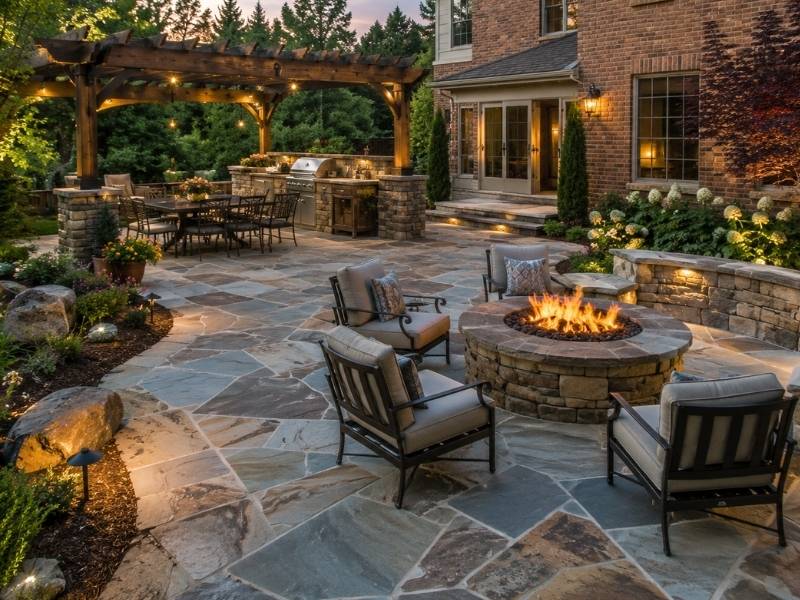
A stone patio can change how you use your backyard. It adds space for grilling, sitting, and relaxing outside. In Birmingham, Alabama, homeowners want patios that handle hot summers, heavy rain, and red clay soil. The right design makes that happen. This guide walks through five things that matter most when planning a stone patio that lasts.
Choosing the Right Location for a Stone Patio
Location decides almost everything else about your patio. Pick the wrong spot and you’ll fight drainage, shade, and access problems for years.
Start by watching your yard for a few days. Notice where water pools after rain. Notice where the sun hits hardest in July. Birmingham summers run hot, so afternoon shade matters.
Things to check before you choose a spot:
- Distance from the house (closer means easier utility and furniture access)
- Slope of the land (gentle slopes drain better than flat ground)
- Existing trees (roots can crack stone over time)
- Privacy from neighbors
- Sun exposure during peak use hours
A patio near the back door works well for daily use. A patio tucked further into the yard feels more like a retreat. Both can work. It depends on how you plan to use the space.
Designing a Stone Patio for Comfort and Function
A patio needs more than good looks. It needs room to move, sit, and gather without feeling cramped.
Size the Space for Real Use
Most small patios fail because they’re too tight for furniture and walking room. A table for four needs roughly 10 feet by 10 feet of open space. Add a grill or fire pit and you’ll want closer to 12 by 14 feet.
Plan Traffic Flow
Leave at least 3 feet of clear walking space around furniture. This keeps the patio from feeling like an obstacle course. Think about how people will move from the door to the seating area, and from the seating area to the yard.
Match the Shape to the Yard
Square and rectangular patios are simple to build and furnish. Curved patios soften a yard but cost more in labor since stone has to be cut to fit the edges.
Selecting Stone Materials That Complement Your Home
Stone choice affects cost, durability, and how well the patio matches your house.
Common options used in Birmingham area homes:
- Flagstone – Irregular shapes, natural look, and a popular choice for homeowners considering flagstone patio installation for casual outdoor spaces.
- Fieldstone – Rugged texture, works well with rustic or farmhouse homes
- Travertine – Smooth surface, stays cooler underfoot in summer heat
- Limestone – Light color, pairs well with brick exteriors common in the South
Match the stone tone to your siding or brick. A warm-toned stone next to red brick creates a connected look. A cool gray stone can clash with warm brick if you’re not careful.
Texture matters too. Smoother stones look more formal. Rougher stones fit casual backyard spaces better and hide dirt longer between cleanings.
Why Proper Drainage Improves Stone Patio Performance
Drainage is the part homeowners skip and regret later. Without it, water sits under the stone, freezes in winter, and pushes the patio out of level.
A patio should slope away from the house at about a quarter inch per foot. This small grade moves water off the surface instead of letting it pool.
Base Layer Matters
A compacted gravel base under the stone allows water to drain through instead of collecting underneath. Skipping this step is the top reason patios sink or shift within a few years.
Joint Material Affects Drainage Too
Sand-filled joints let some water pass through. Polymeric sand locks joints in place while still allowing drainage, which helps stop weeds and ants from moving in.
Alabama clay soil holds water longer than sandy soil. That makes proper grading and a solid gravel base even more important here than in drier regions.
Adding Features That Enhance Outdoor Living Spaces
Once the base patio is solid, added features turn it into a true outdoor room.
Popular additions include:
- Built-in seating walls (saves space, doubles as a planter edge)
- Outdoor kitchens (grills, counters, and storage built into the stone layout)
- Fire features (a stone fire pit or fireplace extends use into cooler months)
- Lighting (path lights or recessed step lights improve safety after dark)
- Pergolas or shade structures (cuts direct sun during peak afternoon heat)
These additions don’t need to happen all at once. Many homeowners build the patio first, then add a fire pit or kitchen in a later phase. Planning the layout early makes it easier to add these features without redoing the whole patio.
Frequently Asked Questions
How long does a stone patio last?
A properly built stone patio with good drainage can last 25 years or more. Poor base preparation can significantly shorten its lifespan, often leading to major repairs within 5 to 10 years.
What is the best stone for a patio in Birmingham, Alabama?
Limestone and flagstone are both excellent choices for Alabama’s climate. They handle heat and humidity well, and their lighter colors help reflect sunlight instead of absorbing it.
Does a stone patio increase home value?
Yes. Outdoor living spaces, including stone patios, are often viewed as desirable features that can improve curb appeal and increase resale value, especially in areas where outdoor entertaining is common.
How thick should the gravel base be under a stone patio?
Most stone patios require a compacted gravel base that is 4 to 6 inches thick. Areas with heavy foot traffic or clay-rich soil may require a deeper base for long-term stability.
Can a stone patio be built on a slope?
Yes. A slight slope helps direct water away from the patio, but steeper slopes may require retaining walls or additional grading to prevent erosion and movement over time.