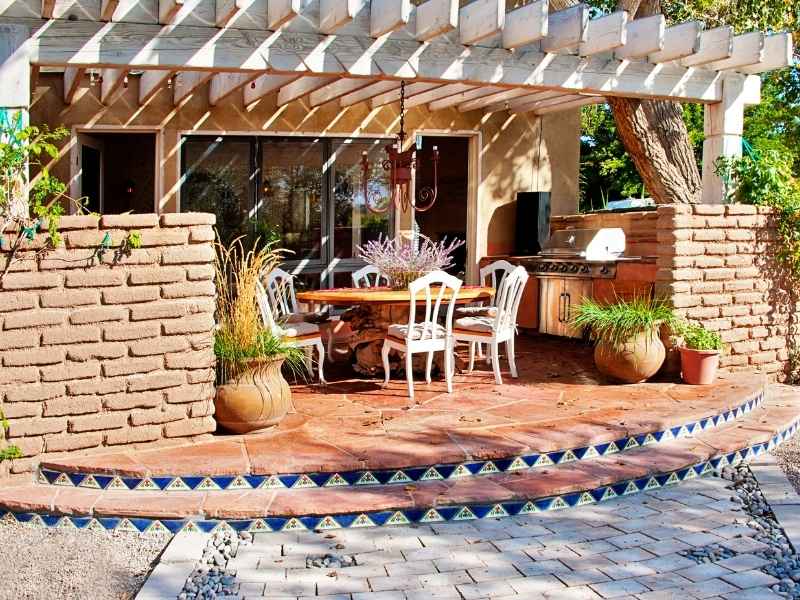
An outdoor kitchen on a covered patio needs more than a grill and a countertop. The materials holding it together matter just as much as the appliances inside it. Brick, stone, and block all handle rain, heat, and daily wear in different ways, and choosing the wrong one can mean cracks, stains, or a rebuild in just a few years. This guide looks at how masonry gets picked and built for outdoor kitchens under a roof, what conditions to watch for, and where homeowners tend to go wrong. If you’re planning a covered patio kitchen, the choices you make now decide how it looks and holds up ten years from now.
Outdoor Kitchen Masonry Materials That Hold Up in Covered Patio Environments
A covered patio blocks direct rain and sun, but it doesn’t block humidity, splashing water, or the heat coming off the grill. That changes which materials make sense. Fire brick works well right around the cooking area because it can take repeat heat cycles without cracking. Natural stone like granite or bluestone handles grease and spills better than softer stones, which stain and pit over time. Concrete block is common for the base structure since it’s cheap and stable. It then gets covered with a veneer that matches the rest of the kitchen. Mortar type matters too. A patio with open sides still gets wind-driven rain, so the mortar needs to resist water without trapping it inside the wall. Skip the softer mortars sold for indoor jobs. They break down fast outside.
Designing Masonry Bases for Built-In Outdoor Kitchen Features
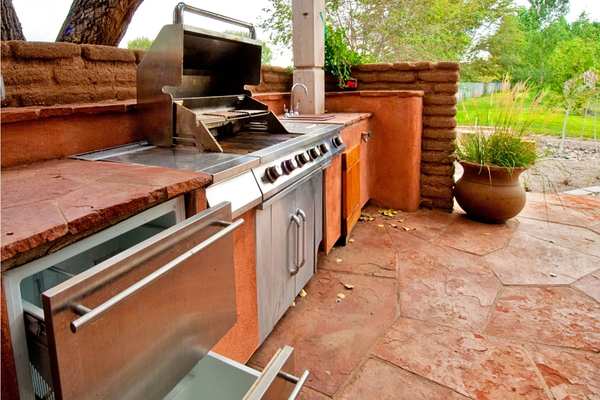
Every built-in grill, sink, or fridge needs a masonry base sized to fit it exactly, not close enough. Manufacturers list cutout dimensions for a reason, and skipping that step leads to gaps, exposed wiring, or a grill that won’t vent properly. The base has to carry real weight too. A stone countertop alone can run over 300 pounds, and once you add a grill, drawers, and stored dishes, the structure underneath needs steel support or solid block, not just stacked brick. Storage cabinets built into the masonry should sit a few inches off the ground to avoid pooling water. Plan the layout on paper first, marking grill placement, counter height, and walking space around the station. Fixing a masonry base after it’s built costs far more than getting the measurements right the first time.
How Covered Patio Conditions Affect Outdoor Kitchen Masonry Planning
A roof over the patio creates its own set of conditions. Less direct sun means masonry stays damp longer after rain, since sunlight isn’t drying it out the way it would in an open yard. That extra moisture can lead to mold on grout lines or, in cold climates, cracking from freeze and thaw cycles inside the brick. Airflow matters just as much. A covered kitchen with low ceilings and closed sides traps heat and smoke near the grill, which speeds up wear on nearby stone and stains the ceiling above it. Drainage needs attention before any masonry goes in. Water has to slope away from the base, not toward it, or you’ll end up with standing puddles under the counters. A slight pitch in the patio floor, paired with proper grout sealing, keeps most of these problems from starting in the first place.
Integrating Brick and Stone Details Into Outdoor Kitchen Designs
Once the structure is sound, the look of the masonry is what people actually notice. Matching the outdoor kitchen to the house exterior makes the whole backyard feel planned rather than added on later. If the home has red brick, a running bond pattern in the same tone ties the kitchen into the property instead of standing apart from it. Stone veneer works well for a more textured look, especially paired with a wood or metal countertop edge. Homeowners often mix materials: brick for the lower base, stone accents around the grill face, and a smooth cap on the countertop edge. That contrast adds interest without looking busy. Grout color counts too. Dark grout hides grease splatter better than white, which is worth thinking about before the tile goes in, not after.
Professional Masonry Installation Considerations for Outdoor Kitchen Projects
Masonry work for an outdoor kitchen isn’t a weekend project, and hiring the wrong crew shows up fast in cracked joints and uneven counters. Site prep comes first. The ground under the structure needs to be level and firm, or the whole base will shift within a year or two. Ask any contractor how they handle gas, water, and electrical lines before masonry work starts, since running them after the fact means cutting into finished brick. Experience with outdoor-specific materials matters more than general masonry skill. A mason who mostly builds indoor fireplaces may not know which mortar and sealant hold up outside in your climate. Ask for references from past outdoor kitchen jobs specifically, and find out how those projects have held up after a few years of weather.
Frequently Asked Questions
What type of masonry is best for an outdoor kitchen?
Brick offers a classic look and handles heat well near the grill. Natural stone like granite resists stains and scratches, making it a strong pick for countertops. Concrete block works for hidden structural walls since it’s affordable and stable. The best choice usually comes down to budget, local climate, and how much upkeep you’re willing to do.
Can a masonry outdoor kitchen be built on an existing covered patio?
Yes, but the existing patio needs a close look first. Check whether the foundation can support the added weight of masonry and appliances, whether drainage already works well, and whether there’s enough space for a comfortable layout. Some older patios need extra footing before construction can start safely.
How long does a masonry outdoor kitchen typically last?
A well-built masonry outdoor kitchen can last 20 years or more. Quality materials, proper mortar, and correct drainage all stretch that lifespan out. Regular cleaning and resealing grout every few years help too. Cheap materials or rushed installation can cut that lifespan down to a fraction of that.
Does an outdoor kitchen need special masonry planning for weather protection?
Yes. Moisture control is one of the biggest factors in how long masonry lasts outside. Proper ventilation around the grill area prevents heat and smoke damage, while sealed grout and sloped drainage keep water from soaking into the structure. Skipping these steps often leads to cracking or staining within a few years.