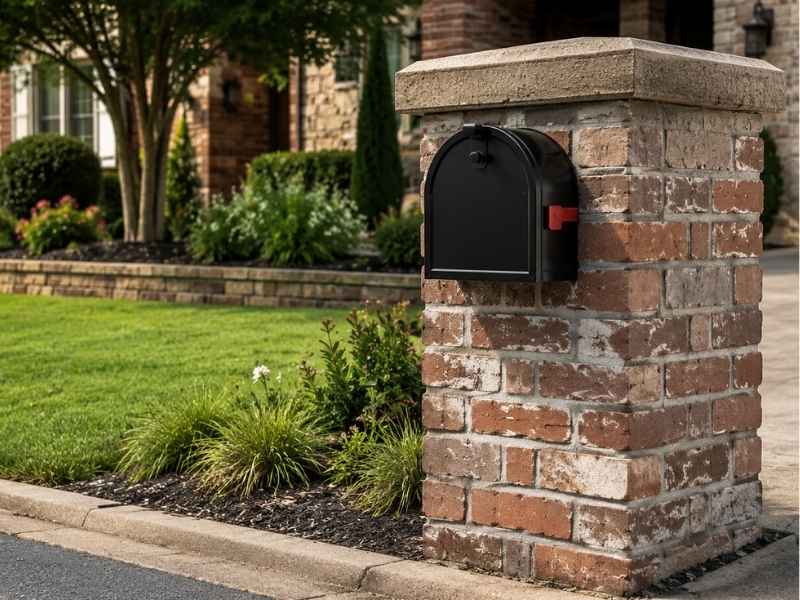
Mailbox repair sounds easy until you look at the brick or stone base underneath. That base has sat outside for years. It’s taken hits from lawnmowers, weather, and the odd mail truck bumper. Before you buy a new mailbox or call a contractor, check what your base can handle first. Some bases just need a new post attached. Others have cracks that run deeper than they look. This guide covers how to check your base, what repair options you have, and when to call a pro instead of guessing.
Evaluating the Existing Masonry Base Before Choosing a Mailbox Upgrade
Start with the base, not the mailbox on top of it. Look for cracks in the brick or stone, and check the mortar joints for gaps. See if the base leans compared to how it used to sit. A base that’s solid but just looks worn is a much easier job. A base that’s shifting in the ground is not. Measure the spot where the mailbox attaches too. New mailboxes don’t always match the holes or post size of older ones. That mismatch can turn a fast swap into a bigger job. Also think about what’s under the base. If it was never set on a real footing, repairs on top won’t last long. A base with strong footing and only surface wear is usually worth repairing. A base with cracks down to the ground usually isn’t.
Mailbox Replacement Options That Preserve Existing Masonry Features
You don’t need to tear out a good brick base just because the mailbox is dented or rusty. Most masonry bases have a standard mounting plate or bracket. Many new mailboxes fit those same setups with a few small changes. A mailbox with a locking door or better weatherproofing can update the whole look. You won’t need to touch the brick or stone underneath. Some homeowners just replace the post arm or the hardware, since that’s often what actually broke. If the attachment points have worn down or rusted, a new bracket kit can fix that. No demolition needed. This route is usually faster and cheaper than starting over, and it keeps the look of the original base.
Repair Approaches for Masonry Mailbox Bases Without Full Reconstruction
Not every problem means starting from scratch. Small cracks in mortar joints can often be repointed. That means a mason removes the old mortar and adds new mortar in its place. Chipped corners or small surface damage can sometimes be patched with matching mortar, especially if the damage hasn’t spread deeper into the base. A slight lean caused by soft soil, not a broken footing, can sometimes be fixed by resetting the base instead of rebuilding it. Loose bricks near the top, where the mailbox attaches, can often be reset and secured. The lower bricks stay untouched. The real question is always how deep the damage goes. Surface problems usually respond well to small repairs. Cracks running through several rows of brick usually don’t.
Updating Older Masonry Mailboxes to Match Modern Home Exteriors
An old masonry mailbox can look out of place next to a newer home. Matching brick that’s no longer made is often too hard to pull off. Most homeowners work with contrast instead of an exact match. A stone cap added to the top of an old brick base can update the look fast. You won’t need to replace the brick underneath. Repainting or resealing worn stone can also brighten a base that’s simply dulled with age, not damaged. If the yard around it has changed, a new cap or trim course can help the base fit in. This works well with updated walkways or garden beds. None of this touches the structural brick. It’s mostly about new finishes and small touches that match the mailbox to the rest of the house.
When a Masonry Mailbox Base Needs Professional Assessment
Some problems are easy to spot from the driveway, but others aren’t. That’s when a pro should take a look. Cracks running through the whole base are a warning sign. So are gaps where the base meets the ground, or any visible lean. Get these checked before you attach a new mailbox. Material choice matters just as much. The wrong mortar mixed with old brick can cause more cracks later, not fewer. A mason can also check the footing below ground. That isn’t something you can judge just by looking. If a base has been patched more than once and keeps failing in the same spot, the real problem is likely never fixed.
Frequently Asked Questions
Can an existing masonry mailbox base be repaired instead of replaced?
Often, yes. If the footing is solid and the damage is limited to surface cracks, chipped corners, or worn mortar, repair is usually the better option. Bases with deep cracks, major shifting, or damage below ground are harder to fix. Those may need a rebuild instead.
Can a new mailbox be installed on an existing brick or stone base?
In most cases, yes. Check that the mounting hardware matches, that the attachment points are still solid, and that the new mailbox fits the space. A size or bracket mismatch can often be solved with an adapter or a new mounting plate.
How do you update an older masonry mailbox without changing the entire structure?
Small changes go a long way. Replace the mailbox, add a new cap or trim piece, or refresh the finish on the stone or brick. Each of these updates the look while keeping the original base in place. None of them need a rebuild.
When should a masonry mailbox base be rebuilt instead of repaired?
Rebuilding makes sense when the footing has failed, when cracks run through several rows of brick, or when the base has been patched many times and keeps failing. It’s also worth doing if you’re planning a bigger landscaping change that the current base won’t fit into.