
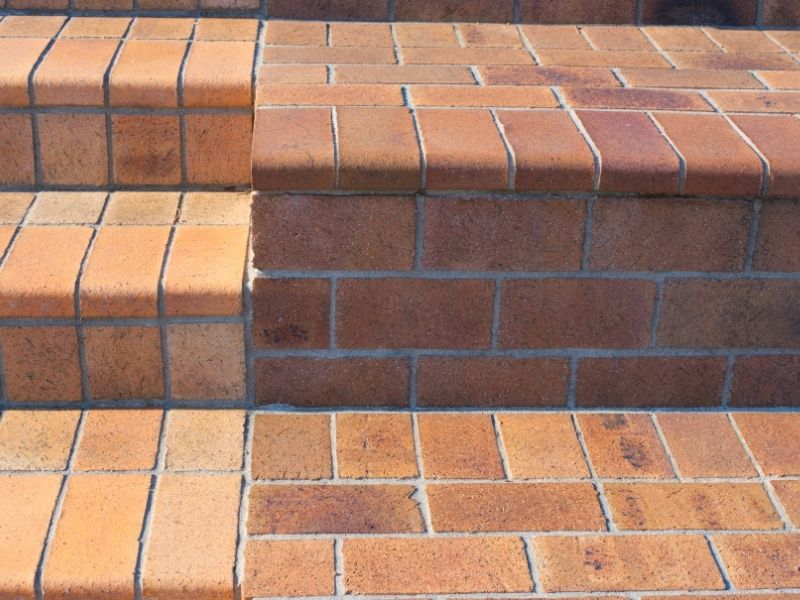
Most people never notice a step until it catches their foot. Our legs learn the height of the first riser and expect every one after it to match, so a step that’s even half an inch off can cause a stumble. A riser is the vertical face between two treads, and on brick steps it can drift out of line as the base settles or mortar fails. Good brick repair starts by finding out why the height changed, then choosing a fix that keeps every step the same.
How Uneven Risers Develop in Brick Masonry Steps
Uneven risers usually come from movement below the brick, not from the brick itself. When the footing or base under the steps settles, one side or one step drops while the others stay put. The brick follows the ground, and the riser heights change with it.
Water is a common cause. Rain that runs off a porch or roof and soaks the soil next to the steps can soften the base and wash out fill. Over time, small gaps under the steps turn into noticeable drops.
Other common causes include:
- Mortar joints that crack and let treads or cap bricks loosen and tip
- Tree roots lifting one side of the steps
- Steps that were built with uneven risers from the start
- A slab under the brick that cracked and shifted
- Steps pulling away from the house or porch as soil moves
Measuring Step Height Differences Before Brick Repair
Measure every riser before choosing a repair. Use a tape measure and a straight level laid across the tread above. Measure from the top of each tread down to the top of the tread below at the left side, center, and right side.
Write the numbers down. The pattern tells you a lot. One short riser at the top often points to a porch or landing change, while every step tilting the same way suggests the whole base has shifted.
Many local codes are based on the International Residential Code, which limits how much riser heights can vary within one flight of stairs. That limit is small, often 3/8 inch between the tallest and shortest riser. Rules for existing exterior steps can vary by local code and project scope, so ask your mason or building department what applies. Even where no rule applies, consistent steps are safer.
Check the treads too. Brick treads should slope slightly so water drains off instead of pooling. A tread that tilts back toward the house or holds water will speed up damage after the repair.
Choosing Between Brick Resetting and Step Reconstruction
The choice depends on what’s happening under the brick. Resetting means removing loose bricks or caps, cleaning them, and laying them back at the correct height on a solid base. Reconstruction means rebuilding part or all of the steps, often including the base or footing.
Resetting usually works when:
- The base and footing are solid and level
- Only a few treads or cap bricks are loose or tipped
- The height difference comes from failed mortar, not settlement
Reconstruction is more likely when several risers are off, the steps are separating from the house, or cracks run through the steps. If the ground keeps moving, new brick on an old base will move again. In those cases the fix may need better drainage, new fill, or a new footing, depending on the soil, slope, and step design.
Ask your brick mason to explain what they see underneath before you agree to a repair. A good mason will tell you plainly if resetting won’t last. Get that answer before work starts, since changing course midway costs more.
Correcting Mortar Joints and Brick Alignment During Repairs
Mortar joints set the final height of each brick, so they’re the main tool for fixing riser differences. When bricks are reset, the mason adjusts the bed joint under each one to bring the tread to the right height. Joints should stay close to the same thickness so the repair doesn’t look patched.
Old mortar has to come out cleanly before new work goes in. The mason chips away loose mortar, cleans the brick, and wets it as needed so the new mortar bonds well. The new mortar should be compatible with the existing brick masonry, which often means not harder than the original.
Color and texture matter on visible steps. A mason can tint mortar to match older joints and use salvaged or matching brick for any broken pieces. If your steps connect to a brick patio or walkway, ask about matching the joint style there too, so the steps and walkway still read as one surface.
Checking Step Stability and Consistent Riser Heights After Repair
A finished repair should feel solid and look even. Walk the steps slowly and watch for any brick that rocks or shifts underfoot. Fresh mortar needs time to cure, so ask your mason how long to avoid heavy loads.
Measure every riser again once the mortar sets. Compare the new numbers with your first measurements. Each riser should now be close to the others, and each tread should slope slightly to drain.
Watch the steps through the next few heavy rains. Water should run off the treads and away from the base instead of soaking in beside it. Any handrail that was removed should be reattached firmly to solid masonry or posts.
Frequently Asked Questions
Can I fix an uneven brick step myself?
Small jobs like resetting one loose cap brick are possible for some homeowners. Getting riser heights consistent across several steps takes more skill and the right tools. Mistakes can make the steps less safe than before. If more than one riser is off or the base has moved, call a brick mason.
How long does brick step repair last?
A repair on a solid base with good drainage can last many years. Resetting brick on a base that’s still settling won’t last as long. The lifespan also depends on mortar quality, weather exposure, and maintenance. Fixing the cause of the movement is the best way to make a repair last.
Will repaired bricks match my existing steps?
A skilled mason can come close by reusing original brick, sourcing a similar brick, and tinting mortar. Older brick may have weathered, so new pieces can look slightly different at first. Most repairs blend in more as they age. Ask to see a sample before the work begins.