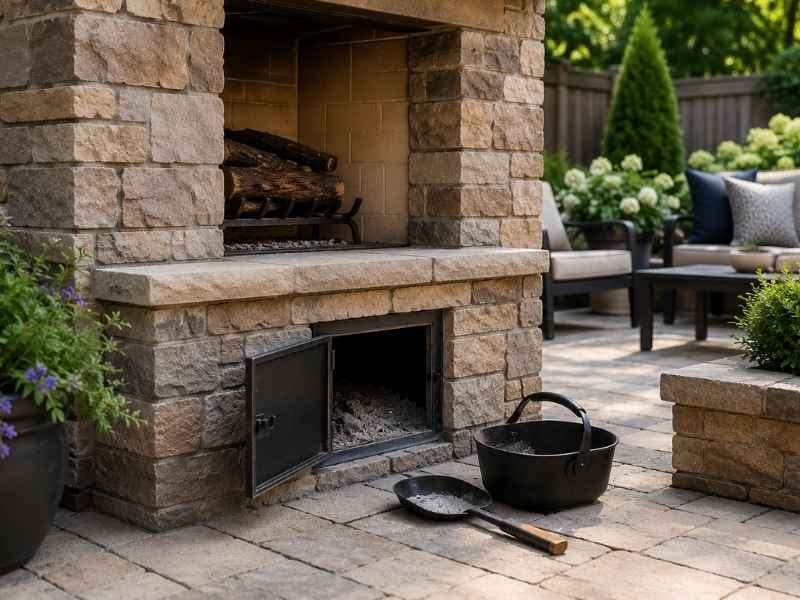
A backyard fire feels great right up until the day you have to clean it out. An outdoor fireplace burns real wood, and every fire leaves behind ash that has to go somewhere. Most built-in models handle this with an ash cleanout, a small door near the base that lets you scoop out what’s left after the flames die down. The trouble usually shows up later. Once the masonry is finished and the patio fills up with furniture and plants, that little door can end up boxed in.
Why Ash Cleanout Access Matters After an Outdoor Fireplace Is Finished
Ash piles up fast when you burn wood, and it has to come out somewhere. The cleanout is the door you’ll use for that job every few weeks, so it needs to stay open and reachable. When it doesn’t, ash builds up inside, blocks airflow under the fire, and holds moisture against the firebrick. That mix wears down mortar and brick faster than most people expect.
There’s a safety side too. Fire safety guidance warns that wood ash can stay hot enough to start a fire for several days after a burn. If you can’t get to the cleanout easily, that hot ash sits longer than it should. A finished stone surround looks like the end of the project, but the cleanout is the part you actually live with for years. When furniture, planters or a fresh patio crowd it, a simple chore turns into a headache.
Where to Position an Ash Cleanout for Easy Backyard Access
The best time to decide where the cleanout goes is before the fireplace is built, while you can still picture how the yard will really be used. Think about your walking paths, your seating area and the spots where people gather when you entertain. Then put the cleanout door on a side you can walk straight up to, ideally facing an open path instead of a wall or a planting bed.
Leave enough room in front to kneel down with a shovel and a metal bucket. If the door opens toward the main seating, you’ll be reaching across chairs every time, so aim it somewhere clear instead. A small paver pad in front helps too, since you won’t be kneeling in mud or mulch. These little choices cost nothing during planning, and they save you real trouble once the space is finished.
How Finished Masonry Can Make Ash Removal More Difficult
Stone veneer and thick surrounds add width to a fireplace base, and that extra bulk can leave the cleanout door with almost no room to swing open. When a raised bed, a built-in bench or a side counter sits right against the opening, you lose the space you need to work. Some of these features get added late, after the fireplace already looks done, so nobody notices the conflict until the first cleanup.
The catch with masonry is that it’s hard to undo. Once the mortar has cured and the veneer is set, moving a cleanout means cutting into finished work, and that gets expensive. Checking clearance before the last courses go up is far cheaper than fixing it after. A good habit is to open the door fully during the build and confirm a shovel and bucket still fit with room to spare.
Planning Ash Removal Around Frequent Outdoor Fireplace Use
Birmingham’s mild winters mean plenty of folks burn outdoor fires through much of the year, not just a few weekends. More fires mean more ash, and it adds up quicker than a once-a-season fireplace ever would. A firebox that hosts a weekly gathering fills up fast, so the cleanout gets a real workout.
Manufacturer guidance commonly says to leave a thin layer of ash, about an inch, under a wood fire for insulation, then clear out the rest so air can move properly. If reaching the cleanout is a pain, people put it off, and packed ash starts trapping damp against the masonry. Over time that moisture is rough on firebrick and mortar joints. A cleanout that stays convenient is the difference between a two-minute chore and a job you keep avoiding.
What to Check Before the Backyard Fireplace Project Is Considered Complete
Before you call the project done, run one simple access test. Open the cleanout door all the way, kneel in front of it, and reach inside with a shovel the way you would on a real cleanup day. Make sure a bucket fits under or beside the opening without bumping into anything permanent.
A few things worth confirming while you’re there:
- Nothing fixed blocks the door, such as a set stone bench, a built planter or an irrigation line.
- Movable items like chairs and pots can shift aside easily.
- The door swings open fully without hitting veneer, edging or a wall.
- You have solid, dry footing to kneel on.
If something permanent is in the way now, it’s far simpler to adjust before the final landscaping goes in. Once the plants are established and the last stone is set, small fixes turn into big ones.
Frequently Asked Questions
Why does an outdoor fireplace need an ash cleanout?
Burning wood always leaves ash behind, and you have to clear it so the firebox stays open. When too much builds up, it chokes the airflow under the fire and traps moisture against the masonry. A cleanout gives you a simple way to pull that ash out and keep the fireplace working the way it should.
Where should an outdoor fireplace ash cleanout be located?
It should sit somewhere you can still reach after the patio, plants and seating are all in place. A door facing an open path or clear area works far better than one tucked behind a bench or a raised bed. Planning that spot early keeps the cleanout usable once the yard is finished.
Can landscaping block access to an outdoor fireplace cleanout?
Yes, and it happens more than people think. Shrubs, planters, decorative stone or a new patio surface can all crowd the door and leave you no room to work. That’s why the area right around the cleanout should stay clear when the landscaping plan comes together.
How often should ash be removed from an outdoor fireplace?
It depends on how often you burn and how your fireplace is built. Frequent use calls for more frequent cleanouts, while an occasional fire can go longer between them. The main thing is to not let ash pile up, since a thin layer is fine but a packed firebox is not.
Should ash cleanout access be checked before construction is finished?
Checking access before the masonry and landscaping wrap up can save you money and frustration later. It’s easy to adjust a tight spot while the crew is still on site and the finishes aren’t set. Once everything is complete, fixing a blocked cleanout usually means cutting into work you already paid for.