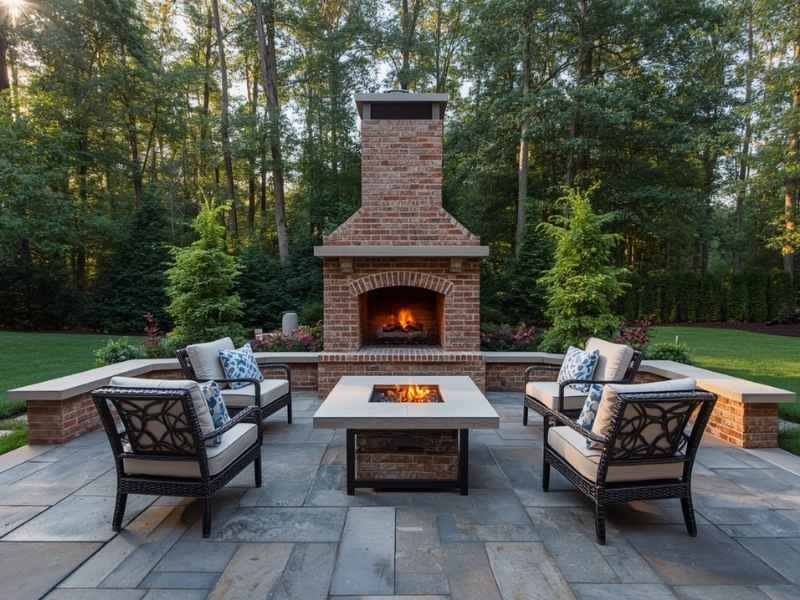
An outdoor fireplace can turn a plain backyard into the spot where everyone wants to hang out. But a lot of Birmingham homeowners jump straight to picking a design before working through the details that actually make an outdoor fireplace safe and functional.
Get the planning right first, and the design part becomes the easy half.
Before you pick a style, nail down placement, clearance rules, and drainage. These decisions affect safety and long-term durability far more than the look of the stone or brick.
Start With Placement, Not Design
Most homeowners start by picturing the finished fireplace. Start with location instead. Where the fireplace sits affects everything else, from safety to how much you’ll actually use it.
Good placement usually means:
- Enough distance from the house, fence lines, and any overhanging trees
- A spot sheltered from prevailing wind, so smoke doesn’t blow straight into your seating area
- Easy access from the kitchen or main living space, since nobody wants to carry drinks and food across the whole yard
- A flat, stable section of the yard, or one that can be leveled without major excavation
Pick the wrong spot and even a beautifully built fireplace becomes something nobody wants to use.
Clearance Rules You Cannot Skip
Birmingham follows building codes that set minimum clearance distances between an outdoor fireplace and nearby structures. These rules exist for a real reason. Heat and sparks travel farther than most people expect.
Before finalizing a location, confirm:
- Minimum distance required from your house or any other structure
- Clearance from fences, especially wood fencing
- Distance from low-hanging tree branches
- Any setback requirement from your property line
Skipping this step can mean a failed inspection or a forced rebuild after the fireplace is already finished. Check with your local permitting office before construction starts, not after.
Why Drainage Matters More Than Most People Expect
An outdoor fireplace sits exposed to Birmingham’s full range of weather, including heavy rain and humidity. Water that pools around the base can undermine the foundation over time, leading to cracking or shifting years down the road.
Plan for drainage by:
- Grading the ground so water flows away from the fireplace base
- Using a gravel or sand sub-base under the foundation to help water drain instead of collecting
- Avoiding low spots in the yard where water naturally pools after storms
This step rarely shows up in design photos, but it’s one of the biggest factors in how long the structure actually lasts.
Choosing Between Wood-Burning and Gas
This decision affects both the construction and the ongoing maintenance of your outdoor fireplace.
Wood-burning fireplaces need:
- A properly sized firebox and flue for good airflow
- Storage space nearby for firewood
- Regular cleaning to remove ash and creosote buildup
Gas fireplaces need:
- A gas line run to the fireplace location, which affects where you can realistically place it
- Less ongoing cleaning, but professional inspection of the gas components periodically
- A slightly higher upfront cost in many cases, offset by lower long-term maintenance
Neither option is better across the board. It depends on how you plan to use the space and how much maintenance you’re willing to take on.
Matching the Fireplace to Your Yard’s Layout
An outdoor fireplace works best when it fits naturally into how your yard already flows.
Think through:
- Whether the fireplace will anchor a seating area, or serve as more of a visual feature from a distance
- How much seating you actually want around it, since this affects the overall footprint needed
- Whether you’ll want it visible from indoors, which might change where on the property it makes sense to build
A fireplace planned around how the space gets used tends to get used a lot more than one placed just for looks.
Foundation Depth and Why It Matters in Alabama Clay
Alabama’s clay-heavy soil expands and contracts more than sandy or rocky ground, especially through wet and dry seasons. A shallow foundation might look fine at first, then start cracking or shifting within a few years.
A mason experienced with local soil conditions will typically:
- Dig deeper than the minimum for a stable footing
- Use a base material designed to handle some ground movement without transferring stress to the fireplace structure
- Reinforce the foundation with rebar or similar material for added strength
This step costs more upfront than a shortcut foundation, but it’s the difference between a fireplace that lasts decades and one that needs early repair.
Questions to Ask Before Construction Begins
- What is the required clearance distance from my house, fence, and property line?
- How will you handle drainage around the fireplace base?
- Do you recommend wood-burning or gas based on how I plan to use this space?
- How deep will the foundation go, and how will it handle our clay soil?
- Will this project need a permit, and who handles that paperwork?
Frequently Asked Questions
Do you need a permit to build an outdoor fireplace?
Many permanent outdoor fireplaces require a building permit, especially if they include a gas line or exceed certain size limits. Check with your local building department before construction begins.
How far should an outdoor fireplace be from a house?
The required distance depends on local building codes and the fireplace design. Many installations are placed between 10 and 25 feet from a home, but always verify the required clearance before building.
Should you choose a gas or wood-burning outdoor fireplace?
The best option depends on your needs. Gas fireplaces provide convenient operation and minimal cleanup, while wood-burning fireplaces offer a traditional fire experience but require more maintenance and fuel storage.
Why is a strong foundation important for an outdoor fireplace?
A stable foundation helps prevent settling and cracking over time. In areas with expanding and contracting clay soils, proper footing depth is essential for long-term structural performance.
Can poor drainage shorten the life of an outdoor fireplace?
Yes. Standing water around the foundation can weaken the supporting base and contribute to movement or cracking. Proper grading and drainage help protect the fireplace from long-term moisture damage.