
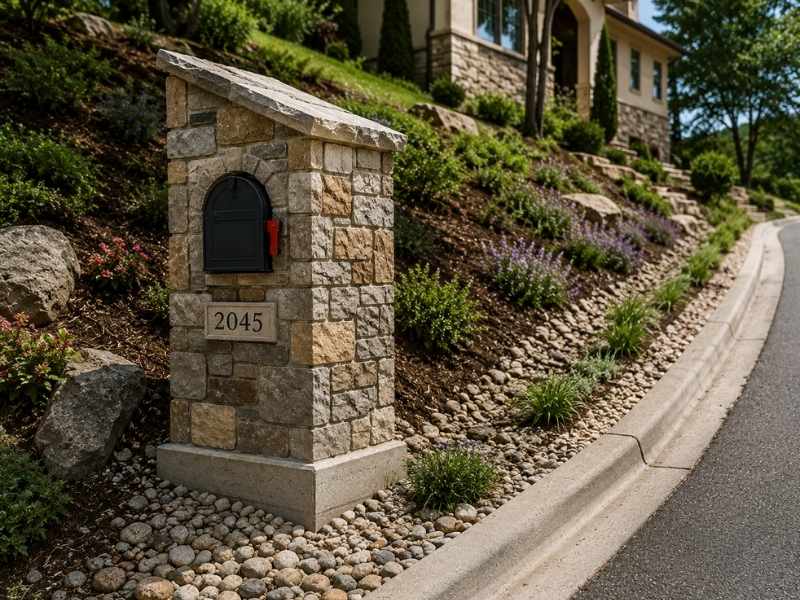
Stone mailbox design for a sloped front yard requires careful planning to create a stable, long-lasting installation. Changes in elevation affect foundation design, drainage, and the finished appearance, making proper site preparation an important part of the project. A properly designed base helps support the weight of the masonry, while grading and drainage features help manage water around the installation. Planning these elements before construction begins can improve long-term performance and reduce the likelihood of settlement, cracking, or other maintenance issues.
Why a Slope Changes the Plan
A flat yard lets a mailbox sit on simple, even ground. A slope removes that easy footing. Gravity and water both work against a heavy structure on a hill, pulling and pushing it downhill over time. A stone mailbox weighs a lot, so these forces have real effect. The design has to account for them from the start, not treat them as an afterthought.
Water is the bigger enemy on a slope. Rain runs downhill and can wash out the soil around and under a mailbox base. Once that soil moves, the structure loses support and starts to shift. A mailbox that was straight in spring can lean by fall if water is left to run under it. Planning for both the slope and the water is what keeps a stone mailbox standing straight for years instead of months.
Building a Base That Holds on a Slope
The foundation is where a sloped mailbox succeeds or fails. On a hill, the base has to be deeper and stronger than one on flat ground. A concrete footing set below the frost line gives the mailbox a stable anchor that resists both settling and frost heave. This footing is the single most important part of the whole build, since everything above it depends on a base that won’t move.
The footing also has to be level even though the ground isn’t. Builders create a level base by digging into the slope and forming a flat footing, sometimes with a small retaining edge on the uphill side. This gives the stone a true, level surface to rest on. A level base is what keeps the finished mailbox from leaning downhill. Cutting into the slope also removes loose surface soil and sets the footing on firmer ground below, which adds to its strength.
Managing Water Around the Mailbox
Water control is a must on a sloped site. Without it, runoff will slowly undermine even a strong base. The design should guide water around the mailbox instead of letting it pool against or under the structure. Simple grading that directs flow to the sides does a lot of the work and costs very little to include.
Drainage under the base helps too. A bed of compacted gravel beneath the footing lets water pass through instead of collecting and freezing. On the uphill side, a small swale or channel can catch runoff and route it around the mailbox. These steps keep the soil around the mailbox firm, which keeps the mailbox where you put it. Water that’s managed well flows past the structure and does no harm. Water that’s ignored finds its way under the base and causes the very leaning you’re trying to prevent.
Placing the Mailbox for Access and Safety
A sloped yard makes placement a real design question. The mailbox still has to meet the postal service’s height and reach rules, measured from the road surface. On a slope, hitting those numbers takes some planning, since the ground by the curb may sit above or below the road. The design has to work with the road level, not the yard level, or the box ends up too high or too low to use.
Safety and access matter as well. The carrier and the homeowner both need to reach the box without scrambling on a steep bank. A small leveled area or a step at the base can make access safe and easy. Placing the mailbox where a car can pull up and where sight lines stay clear keeps it both usable and safe. A mailbox that forces a carrier onto a slippery slope is a problem waiting to happen, so good placement is part of a good design.
Choosing Stone and Finishes That Last
The stone choice affects how well the mailbox handles a slope’s wear. Dense, hard stone stands up to weather and the constant push of water on a hill. The mortar matters too, since good joints keep water out of the structure. Weak mortar on a slope invites the very water damage you’re trying to avoid, so it’s worth using a quality mix and solid workmanship.
Finishes should match the exposure. A sealer can help the stone and mortar shed water, which is worth more on a slope than on flat ground. Matching the stone to the home’s exterior ties the look together, but on a hill, durability comes first. A mailbox that looks great and fails in two winters helps no one. A well-built stone mailbox becomes a lasting feature instead of a repair waiting to happen, and on a slope that comes down to smart choices in stone, mortar and finish.
Frequently Asked Questions
How deep should the foundation be for a stone mailbox on a slope?
Deep enough to reach below the frost line and sit on stable ground. A concrete footing at that depth resists settling and frost heave. On a slope, this footing is the key to keeping the mailbox from leaning or shifting over time.
How do I keep a stone mailbox from leaning on a hill?
Start with a deep, level footing and control the water around it. Most leaning comes from a weak base or soil washed out by runoff. A strong foundation and good drainage together keep the mailbox straight for the long haul.
Does a stone mailbox on a slope need drainage?
Yes. Water running downhill can wash out the soil that supports the base. A gravel bed under the footing and grading that routes water around the mailbox keep the ground firm and the structure stable through wet seasons.
How do I meet mailbox height rules on a sloped yard?
Measure from the road surface, not the yard. Postal rules set the height and reach from the road, so the design has to match the road level even when the yard sits higher or lower. Planning this early avoids a rebuild later.
What stone works best for a mailbox on a slope?
Dense, hard stone paired with strong mortar holds up best. It resists weather and water, which hit harder on a slope. A water-shedding sealer adds another layer of protection for a mailbox exposed to constant runoff.