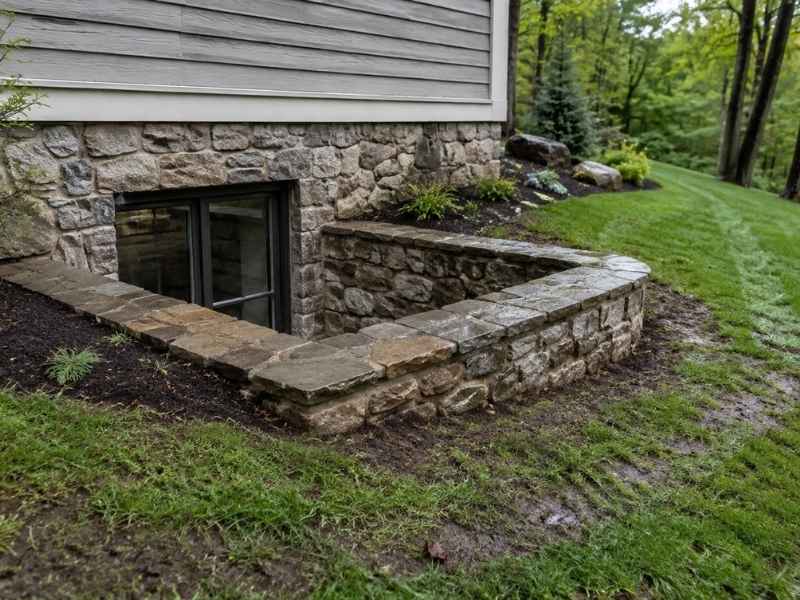
Stone masonry does more than look good outside. Around a basement window well, it works as a small wall that holds back soil and keeps water from creeping toward the glass. A lot of homeowners never think about the ground around that stonework until water shows up where it shouldn’t. That is usually where a construction survey earns its keep. It shows how the yard actually slopes, not how it looks to the eye, and that difference matters more than most people expect.
It sits on plenty of hillside lots, and those slopes push rainwater in whatever direction gravity points it. If the grading near a window well is off, even by an inch or two, water finds the low spot. Sometimes that low spot is right next to the stone.
Why Basement Window Wells Need Controlled Water Flow
A window well sits lower than the yard around it. That’s the whole point. It lets light into a basement room. But it also means the well is sitting in a natural catch basin unless the ground around it is shaped to send water somewhere else.
Think about what happens during a normal rainstorm. Water hits the yard and moves downhill. If the stonework around the well isn’t paired with the right grade, that water rolls straight toward the opening instead of past it. The stone itself isn’t the problem here. Stone is sturdy and handles moisture fine on its own. The trouble starts when the soil grade funnels water against it again and again.
Over time, repeated water contact softens the ground beneath and behind the stone. That’s not a drainage system failure. It’s a grading failure right at the point where earth meets masonry. Homeowners often notice water stains or a musty basement smell long before they think to check the yard’s slope, which is why this connection gets missed so often.
Grading Considerations Where Stone Meets a Sloped Yard
Birmingham’s hills make grading trickier than it would be on flat ground. A yard that slopes toward the house creates constant pressure for water to travel downward and inward, right past the stonework surrounding a window well.
The finished grade around that stone needs to do one job well: push water away from the opening, not toward it. That usually means the ground should slope down and away from the house for several feet before it levels off. When a lawn or landscaped bed sits higher than the stonework, or when the grade tilts even slightly toward the well, water has an easy path in.
This is where it gets tricky for homeowners doing their own yard work. A slope can look fine standing up and still be wrong. A few feet of drop over a long stretch is hard to spot with your eyes. That’s exactly the kind of detail a proper survey catches, because it measures elevation instead of guessing at it. Skipping that step is how small grading mistakes turn into recurring water problems.
Preventing Soil From Pressing Against Stone Window-Well Structures
Soil doesn’t stay put. Mulch settles, dirt washes downhill after storms, and landscaping projects add new material without anyone tracking how it changes the grade. Over a few seasons, that buildup can creep higher against the stonework than it was ever meant to sit.
When soil piles up against the stone, two things happen. First, it adds pressure the structure wasn’t built to handle at that height. Second, it can bury the low point that used to let water drain away from the well. The stonework starts holding back more than it should, and drainage patterns that used to work stop working.
Keeping a clear gap between the soil line and the top of the stone protects both the grading and the masonry. This isn’t about digging a trench or adding new hardware. It’s about paying attention when the yard changes, whether from a landscaping project, erosion, or just years of leaves and dirt settling in the same spot. Left unchecked, that slow soil creep is one of the most common reasons window-well stonework starts to fail.
How Heavy Rain Can Test Basement Window-Well Grading
Birmingham gets its share of intense rain, especially in spring. A heavy storm doesn’t create new problems in the grading. It exposes ones that were already there. Small mistakes that never mattered during light rain suddenly show up when the ground gets soaked fast.
Watch for pooling water near the base of the stonework after a storm. That’s usually the clearest sign something is off. Muddy soil that stays wet for days after everyone else’s yard has dried out is another red flag. So is a patch of grass that always looks a little greener or a little soggier than the rest of the lawn, since standing water tends to feed plants unevenly.
These signs don’t always mean disaster is coming. But they do mean the grading isn’t doing its job the way it should. Catching this after a storm, while the evidence is still fresh, makes it much easier to trace the water’s actual path than trying to guess weeks later on a dry day.
When a Mason Should Evaluate Stonework Around a Lower-Level Window
Not every yard needs a mason’s opinion every year. But certain changes are worth a second look, and putting that inspection off usually costs more later.
If the grading around the house has changed recently, whether from new landscaping, a driveway project, or just years of soil movement, it’s worth having someone check whether the stonework is still protected the way it was originally designed. The same goes for any sign of settlement near the well, like stones that seem slightly shifted or gaps that weren’t there before.
Persistent runoff is another clear signal. If water keeps finding its way toward the same spot no matter what small fixes get tried, the issue is probably bigger than surface-level maintenance. A mason who understands how grading interacts with stonework can look at the whole picture, not just the stone itself, and figure out where the real problem is sitting.
Frequently Asked Questions
How should the ground slope around a basement window well?
The ground should slope down and away from the window well for several feet, guiding surface water past the stonework instead of letting it collect beside it.
Why does grading matter around basement window wells on hillside properties?
Sloped lots naturally send runoff toward the lowest point on the property, which is often right where a basement window sits, so the surrounding grade needs careful planning to redirect that flow.
Can poor grading cause water to collect around a basement window well?
Yes. Low spots or soil that’s shaped incorrectly can concentrate runoff right next to the stonework, raising the risk of water reaching the window itself.
Should soil touch the stone around a basement window well?
Soil shouldn’t build up against the stone to the point where it covers the intended drainage path or adds pressure the structure wasn’t designed to hold.
When should stone masonry around a basement window be inspected?
An inspection makes sense after repeated water pooling, noticeable shifts in the surrounding grade, stones that look displaced, or drainage patterns that changed following a landscaping project.