
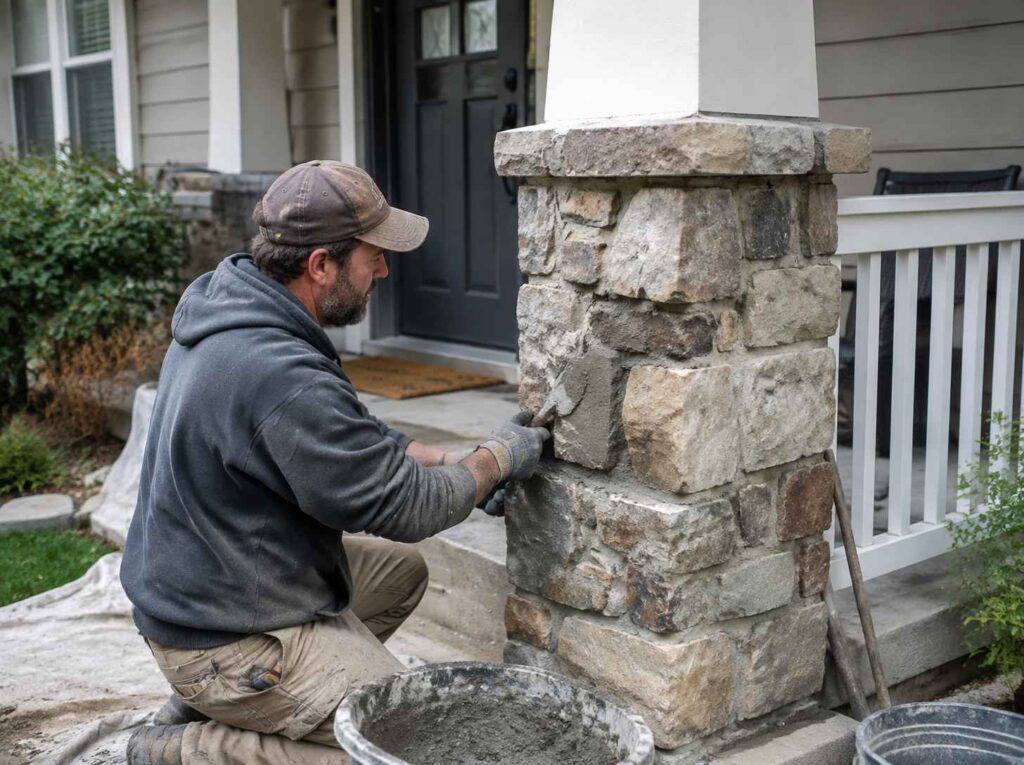
Stone masonry on a front entry column takes a beating that most walls never see. Rain hits the cap, water runs down the face, and the base sits in splash and soil moisture year after year. Once the mortar erodes and the stone starts to loosen, a patch job rarely lasts more than a season or two.
Rebuilding the column the right way means looking past the surface. The real work happens inside the column, at the base, and under the cap. Get those parts right and the new stone will look good long after the last joint is struck.
Assessing Weathered Stone Masonry on Existing Entry Columns
Start by figuring out whether the column is tired on the outside or failing on the inside. Eroded joints, flaking stone faces, and white mineral staining usually point to water problems near the surface. A lean, a wide crack running through both stone and mortar, or a gap at the porch beam suggests something deeper.
Look closely at the base and the top. A sunken or tilted base often means the footing has settled or washed out. A cracked or missing cap lets water pour straight into the core, which speeds up every other kind of damage.
Find out what the column actually supports. Many entry columns hold up a porch roof or portico beam, and some wrap a wood or steel post inside the stone. Rusted steel or rotted wood inside a column changes the job completely, and the roof may need temporary shoring before any stone comes off. Before demolition, have your mason check these points:
- Whether the column carries roof or beam weight
- Footing condition and signs of settlement
- What the core is made of and how sound it is
- Cap condition and how water drains off the top
- Stone and mortar that can be salvaged
Selecting Stone Masonry for Front Entry Column Rebuilds
The stone you pick has to hold up to weather and match the house. Limestone, sandstone, granite, and fieldstone all show up on entry columns, and each one weathers in its own way. Softer, more porous stones can wear faster in wet spots, so ask your mason how a stone holds up on columns that take heavy rain.
Reusing the original stone is often the best match. A careful mason can take the column down, clean the good pieces, and set them back with new stone mixed in where needed. Plan for some loss, since broken or badly worn pieces won’t be worth saving.
If you need new stone, compare more than color. Size, shape, and face texture all affect the look, and rough fieldstone won’t pass for cut stone up close. Ask for samples, check them against the old columns in daylight, and confirm the supplier can provide enough from the same source to finish the job.
Rebuilding Column Bases, Cores, and Stone Masonry Facing
A rebuilt column is only as solid as what sits under it. If the footing has settled or cracked, it usually needs replacing before new stone goes up. Footing size and depth can vary by soil, column load, and local code, so a heavily loaded porch column may call for an engineer’s input.
The core carries the weight and gives the stone something to bond to. Many masons build the core from concrete block filled with grout and reinforced with steel, while others wrap stone around a structural post. Whichever approach fits your porch, the core should be dry, plumb, and sized to leave room for the facing.
Facing stone goes on last. Full-depth stone is laid in mortar and tied to the core with metal anchors, while thinner stone veneer is set with a bonding mortar over a prepared surface. The base course should give water a clear way out at the bottom, so the lowest stones aren’t sitting in a puddle after every storm.
Incorporating Column Caps and Moisture Protection
The cap does more to protect a column than any other single piece. A good cap overhangs the stone on every side and has a drip edge underneath so water falls clear of the face. It should also slope slightly so rain doesn’t sit on top.
One-piece caps of cast stone or natural stone tend to shed water better than caps built from several small pieces. Every joint on top of a column is another place for water to get in. If a multi-piece cap is part of the design, those joints need careful sealing and regular checks.
Moisture protection continues below the cap. Many masons install a membrane or flashing under the cap to keep water out of the core. Use mortar suited to the stone and the exposure, and ask how the column will drain at the base, because trapped water is what tears stone columns apart over time.
Matching Rebuilt Stone Masonry With the Existing Entryway
A rebuilt column should look like it was always there. Mortar color and joint style make a bigger difference than most people expect, and bright new mortar next to weathered joints stands out from the curb. A small test panel lets you approve the mortar and stone pattern before the full column goes up.
Look at everything the column touches. Entry steps, a stone patio near the porch, a front walkway, and brick masonry on the house all frame the column. Proportion matters too, since a column that’s even a few inches wider or narrower than its partner will look off once both are finished.
If you’re rebuilding one column out of a pair, expect the old one to look a bit different for a while. New stone and mortar need time to weather. Some owners have the other column cleaned or repointed at the same time so the two read as a set.
Frequently Asked Questions
Can weathered entry columns be repaired instead of rebuilt?
Yes, if the damage is limited to the surface. Repointing worn joints and replacing a few loose stones can work well on a sound column. A leaning column, a failed footing, or a damaged core usually calls for a rebuild. A mason can tell which one you’re dealing with after a close inspection.
Does the porch roof need support during a rebuild?
If the column carries roof or beam weight, yes. Your contractor will usually set temporary posts or shoring before taking the column apart. Skipping this step can let the roof sag or shift. Ask how support will be handled before demolition starts.
Can the original stone be reused?
Often it can, and reused stone is usually the closest match. Some pieces will break during removal or be too worn to set again. Your mason can blend in new stone where needed. Ask for an estimate of how much new stone the job might take.