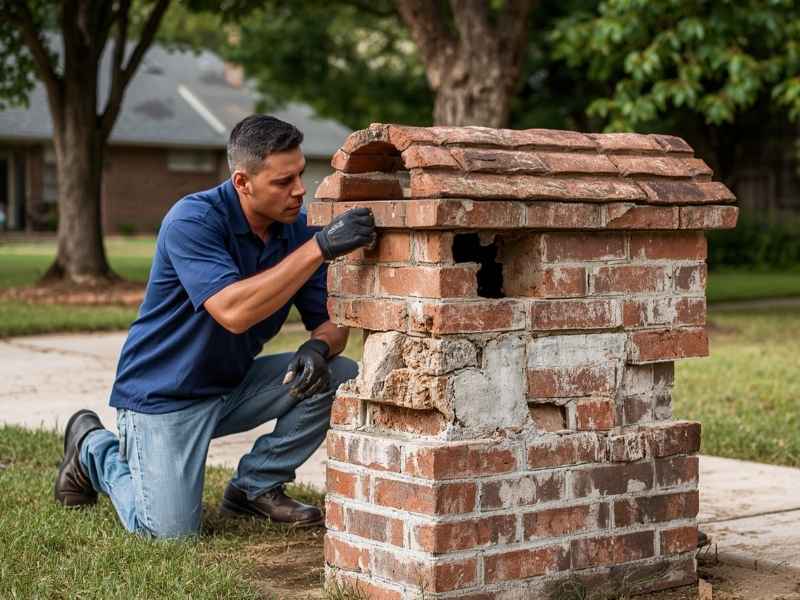
A brick mailbox takes a beating most homeowners never think about. Mail carriers bump it. Lawn mowers clip the base. Rain soaks the brick year after year. Brick mailbox repair often starts as a small fix, but some damage signals a bigger problem hiding underneath.
In Birmingham, where humidity and heavy rain are part of the yearly routine, catching these signs early saves you from a full rebuild later.
A few cracked bricks or loose mortar can often be patched. Leaning posts, widespread crumbling, or repeated cracking in the same spot usually mean the mailbox needs more than a surface fix.
Small Damage vs. Deeper Structural Trouble
Most brick mailbox issues start small. A chipped corner. A hairline crack. Loose mortar between a few bricks. These are usually easy fixes that a mason can patch in an afternoon.
The bigger question is whether that small damage is isolated or a symptom of something happening underneath. A single cracked brick from an accidental bump is not the same as cracking that keeps returning in the same spot every few months.
Signs a Quick Patch Will Actually Hold
Some damage really is simple. You can usually patch and move on if you see:
- One or two cracked bricks with no cracking nearby
- Small chips or scrapes from mower or vehicle contact
- Minor mortar wear on the surface, without deep gaps
- Cosmetic staining that hasn’t affected the brick’s strength
These issues rarely point to a deeper problem. A mason can replace the damaged bricks or repoint the mortar, and the mailbox holds up fine for years afterward.
Signs That Point to a Bigger Problem
Other damage patterns mean the patch job won’t last. Watch for these warning signs:
- The mailbox leans or tilts, even slightly, compared to how it originally stood
- Cracks run through multiple bricks in a line, rather than staying isolated
- Mortar crumbles easily when you press a finger into it
- The base feels loose or shifts when you push against the post
- Cracking keeps reappearing in the same spot after previous repairs
Any of these usually means the foundation or core structure has a problem that a surface patch won’t fix.
Why Leaning Is the Most Serious Warning Sign
A mailbox that leans is telling you something moved underneath it. This usually points to one of a few causes:
- A weak or shallow foundation that never fully supported the weight
- Soil erosion around the base from years of rain runoff
- Frost heave pushing the ground unevenly, though this is less common in Birmingham than in colder climates
- Root growth from a nearby tree disturbing the base
Patching the visible brick without addressing what’s happening below ground means the lean will likely return, and probably get worse.
What Causes Repeated Cracking in the Same Spot
If a crack keeps showing up in the same location after being patched, that’s rarely bad luck. It usually means there’s ongoing movement or stress at that exact point.
Common causes include:
- A structural joint that was never properly reinforced during original construction
- Water infiltration that keeps softening the same section
- Vibration from nearby traffic or a driveway that shifts the ground slightly over time
A mason checking this kind of repeat damage will often look past the crack itself and investigate what’s causing the movement in the first place.
How Water Damage Shows Up Differently on a Mailbox
A brick mailbox takes on rain from every angle, since it usually sits fully exposed without any roof overhang for protection. This makes water damage progress faster than it might on a house wall.
Watch for:
- Efflorescence, the white powdery residue that forms when water moves through brick and evaporates at the surface
- Soft, crumbly mortar near the base, where water tends to pool longest
- Discoloration that spreads wider each rainy season
Catching water damage early, before it reaches the base or foundation, keeps the repair simple instead of turning into a full rebuild.
When Full Rebuild Beats Another Patch
Sometimes the smartest move is stripping the mailbox down and rebuilding it properly, rather than patching around a problem that keeps coming back.
This usually makes sense when:
- The base or foundation shows clear signs of failure
- Multiple past patches have already failed in the same areas
- The lean has progressed enough that the mailbox looks visibly crooked
- More than a third of the brick face shows cracking or crumbling
A full rebuild costs more upfront but saves you from repeating a patch job every year or two on a structure that was never going to hold long term.
Questions to Ask Before Hiring Someone for Mailbox Repair
- Is this damage isolated, or does it point to a foundation issue?
- Will a patch actually hold, or is this heading toward repeat failure?
- What caused the lean or cracking in the first place?
- Should we rebuild the base, or is the current foundation solid enough to keep?
- What’s the expected lifespan of a patch repair versus a full rebuild here?
Frequently Asked Questions
How much does brick mailbox repair cost compared to a full rebuild?
Minor repairs typically cost much less than rebuilding the entire mailbox. A full rebuild requires removing the existing structure, repairing or replacing the foundation if needed, and constructing a new mailbox from the ground up.
Can a leaning brick mailbox be repaired without rebuilding it?
Sometimes. If the lean is slight and the foundation remains stable, repairs may be enough. A mailbox with significant movement or a failing base often requires a complete rebuild for lasting stability.
Why do cracks keep coming back in the same area of a brick mailbox?
Recurring cracks often indicate an underlying issue such as foundation movement, moisture intrusion, or a structural weakness. Addressing the root cause is essential before making permanent repairs.
Does white residue on a brick mailbox mean there is a problem?
White residue, known as efflorescence, is a sign that moisture is moving through the masonry. While the residue itself is not harmful, ongoing moisture can gradually weaken mortar joints and brick if left untreated.
How long should a brick mailbox last before major repairs are needed?
A properly built brick mailbox can last for decades. Its lifespan depends on construction quality, weather exposure, moisture conditions, and protection from accidental impacts by vehicles or lawn equipment.