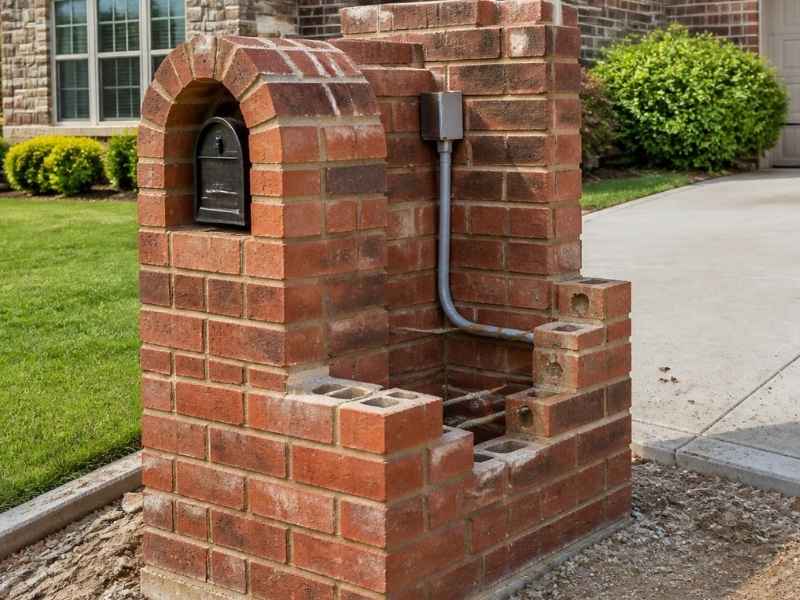
A masonry mailbox with a soft light on top looks great at night. It also helps drivers and guests find your address in the dark. The catch is that the wiring has to go in before the brick does.
A masonry mailbox is built from brick, block, or stone. Once the brickwork or stonework is set in mortar, the structure becomes solid and difficult to change. Forget the wiring, and adding a light later means drilling, chipping, or tearing into finished masonry. That kind of fix is messy, costly, and often leaves a mark.
Here is the takeaway. If you want lights on your masonry mailbox, plan the conduit before construction starts. A conduit is a protective tube that carries electrical wires through the structure. Set it early, and the wiring hides cleanly inside the brick with no damage later.
Why Mailbox Lighting Conduits Must Be Planned Early
Masonry is built for durability, which is exactly why it resists changes. Brick and block get locked in place with mortar, creating a strong structure designed to hold up over time. Once the mortar cures, the mailbox becomes one solid piece, and you cannot easily thread a wire through it after the fact.
Lighting needs a clear path from the power source to the fixture. That path is the conduit, and it has to be in place before the masonry goes up. The crew builds the brick around the conduit, hiding it inside the structure. Try to add that path later, and you are cutting into finished work.
Planning early saves money and looks better too. A hidden conduit keeps wires safe and out of sight. A late add-on often means exposed wire or patched brick. Deciding on lights before construction avoids both problems.
Coordinating Conduit Routes With the Mailbox Foundation
The conduit route starts at the base. Most masonry mailboxes sit on a concrete foundation or footing. That footing anchors the structure, resists shifting over time, and helps the mailbox fit properly with surrounding hardscaping. The wiring usually enters through or beside the footing, so the conduit path needs to be established before the foundation is poured.
This is why the conduit and the foundation must be planned together. The path for the wire often runs underground to the mailbox, then up through the base. If the footing gets poured without a sleeve for the conduit, the route is blocked. Coordinating the two keeps the wiring hidden from the ground up.
Talk through the route before any concrete is poured. A few key points to settle early include:
- Where the power line enters the mailbox base
- How deep the underground conduit will run
- Where the conduit rises inside the masonry
- Where the light fixture sits at the top
Getting these set before the pour keeps the whole run clean. It also prevents a blocked path that forces changes later.
Planning Power Access for Mailbox Lights and Fixtures
Lights need power, so the source matters. Some masonry mailbox lights run on low-voltage wiring from a transformer. Others tie into a standard circuit. The type you choose affects how the conduit and wiring are planned.
Low-voltage systems are common for landscape and mailbox lights. They use a transformer that steps power down to a safer level. Standard-voltage fixtures give more output but call for more care and often a permit. A licensed electrician can help you pick the right setup.
Plan where the power comes from before construction. The run from the house or a nearby source shapes the conduit route. Electrical work has real safety and code rules, and those can vary by municipality and county. Have a licensed electrician handle the wiring and confirm any permits your project needs.
Avoiding Masonry Damage From Late Electrical Changes
Changing masonry after it cures is the outcome you want to avoid. Cutting into brick to add wiring damages the structure. It weakens the bond and leaves scars that are hard to hide. A neat masonry mailbox can end up looking patched.
Late changes cost more than early planning ever would. A mason may have to remove and reset units. A patched section rarely matches the original brick and mortar. What could have been a simple conduit turns into a repair job.
There is a durability concern too. Masonry sheds water best when it stays intact. Drilling holes or chipping mortar can let water in over time. In a climate with heavy rain and humidity, that moisture can lead to cracks or damage. Planning the conduit early keeps the masonry whole and lasting.
Including Lighting Conduits in the Final Construction Plan
The best way to get this right is to put it on paper. The lighting conduit should be part of the final construction plan for the mailbox. That way every trade knows the plan before work begins.
A clear plan keeps the mason and electrician working together. The plan should show the conduit route, the power source, and the fixture location. When both trades build from the same plan, the wiring fits without a hitch. Confirm the details with your contractor before the first brick is laid.
Treat the conduit as a required step, not an add-on. Decide on lights, settle the route, and lock it into the plan early. If a permit or an electrician’s schedule affects the timeline, sort it out before construction starts. A little planning now gives you a clean, lit mailbox with no regrets.
Frequently Asked Questions
Do I need a conduit for a lighted masonry mailbox?
Yes, a conduit is the standard way to run wiring through masonry. It protects the wires and hides them inside the brick or stone. Setting it before construction keeps the wiring clean and safe. Adding light without a conduit usually means exposed wire or damaged masonry later.
Can I add lights to a masonry mailbox after it is built?
It is possible, but it often means cutting into finished masonry. That can damage the brick, weaken the structure, and leave visible patches. The result rarely looks as clean as a planned install. Planning the conduit before construction avoids all of that.
What kind of power do masonry mailbox lights use?
Many use low-voltage wiring from a transformer, which is common for outdoor lights. Others tie into a standard circuit for more output. The right choice depends on your fixture and your setup. A licensed electrician can help you decide and handle the wiring safely.
Do I need a permit to wire a masonry mailbox light?
You might, since electrical work often falls under local rules. Permit requirements can vary by municipality and county. Standard-voltage wiring is more likely to need one than low-voltage. Check with a licensed electrician or your local office before starting.
Who plans the conduit, the mason or the electrician?
Both should be involved, ideally working from the same plan. The electrician handles the wiring and power source, and the mason builds around the conduit. Coordinating the two before construction keeps the install clean. Settle the route together so nothing gets missed once the brick goes up.