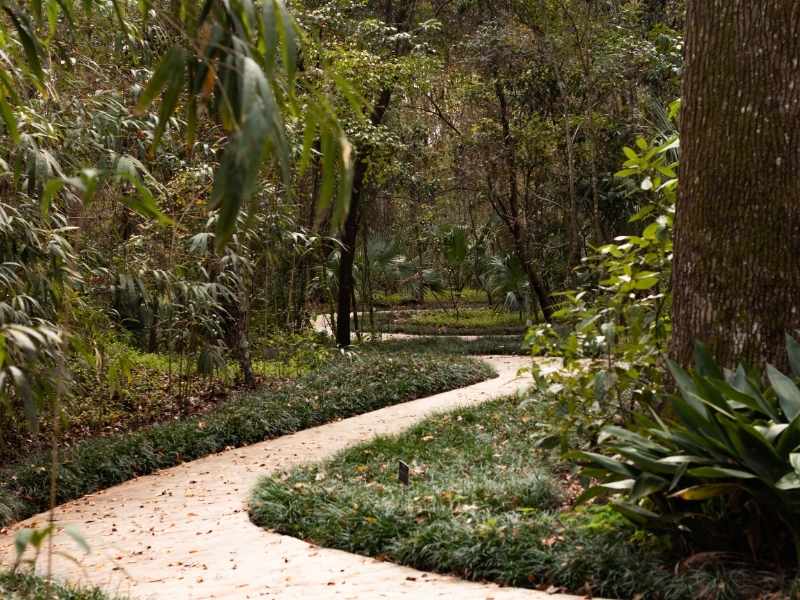
A mature shade tree can make a yard. It cools the patio, frames the garden, and makes a new pedestrian walkway feel like it has always been there. It can also lift pavers, crack mortar, and tilt stones into trip hazards when hardscape crowds its roots. Stone pavers can sit next to a big tree for decades, but the design has to give those roots room to grow, breathe, and drink.
Plan around the root zone first and pick the pavers system second. Keep digging shallow near the trunk, use a flexible dry-laid base, and let rain soak into the soil. The sections below cover layout, materials, drainage, and upkeep.
Planning Stone Pavers Around Mature Tree Roots
Tree roots sit closer to the surface than most people expect. Most of the small roots that take in water live in the top foot or so of soil, and they often spread well past the edge of the branches. Many arborists use a rule of thumb of about one foot of protected radius for every inch of trunk diameter. The real number depends on species, age, health, and soil, so an arborist should confirm it for large trees.
Before masonry work begins, walk the site with your contractor. Note exposed roots, heaved soil, and the flare where the trunk widens at the base. Check how any nearby brick patio or stone patio has held up, since old cracks show where roots already push. Then flag the root zone so trucks and pallets of stone stay off it during the job.
Choosing Pavers That Work With Root Growth
Flexible paver systems usually work best near trees. Dry-laid stone pavers or brick pavers rest on compacted gravel with sand joints and no mortar, so a few units can be lifted and reset when a root thickens. A mortared walkway on a concrete slab is rigid and tends to crack under root pressure. The slab also needs deeper digging, which can cut the roots you’re trying to save.
Some installers build a low-dig base near trees, placing aggregate over geotextile fabric or geogrid instead of excavating. This protects more roots, though it can raise the walkway height a little. Whether it fits your yard may depend on soil, traffic, drainage, and project design.
Brick Versus Stone Near Trees
Neither material is always the better choice. Brick pavers are small and uniform, so they’re easy to pull and reset, and they tie in well with brick masonry on the house. Natural stone comes in larger pieces that can bridge small bumps, but it’s heavier to lift and some types vary in thickness. Permeable pavers with open joints are also worth asking about, since they let water and air reach the soil.
Creating Walkways Without Crowding the Tree
The best stone pavers walkway near a big tree usually bends around it. A gentle curve along the outer edge of the root zone saves more roots than a straight line past the trunk, and it looks more natural with mature plantings. Use the path to link the spots you actually use, such as the back door, a stone patio, an outdoor kitchen, or an outdoor fireplace. About 3 feet of width works for one walker, while main routes often need 4 to 5 feet for two people or a grill cart.
Changes in elevation need extra care. Adding fill over roots can starve them of oxygen, and cutting the grade down can sever them. If you need a retaining wall or steps near the tree, keep the footing as far from the trunk as the layout allows and plan those transitions early.
Managing Drainage Around Pavers and Tree Roots
Drainage near a tree has two jobs. It has to move water off the walkway and away from the house so pavers don’t settle. It also has to let enough rain reach the roots, which wide solid paving can block. Permeable joints between stone pavers, gravel borders, or planting beds along the edges help water soak in where roots can use it.
Slope the path slightly so water sheds to the sides, not into one low spot. Don’t aim downspouts or patio runoff straight at the trunk, since constant pooling can lead to rot. Never pile soil or gravel against the trunk flare to level a path, because the flare needs air. Clay soil drains slowly, so ask how the base will handle standing water after heavy storms.
Maintaining Stone Pavers as Roots and Trees Grow
Trees keep growing after the pavers go in, so plan on light upkeep. Walk the path once or twice a year and after big storms, looking for lifted edges, rocking stones, and washed-out joints. When roots raise a few pavers, the usual fix is to lift them, thin the bedding layer, and reset them. Don’t grind or cut large roots yourself, because that can weaken the tree.
Keep joints topped off and sweep leaves and fruit off the stone so they don’t stain it. Leave a gap between the pavers and the trunk, and widen that opening as the tree thickens. If one section keeps lifting, a mason can often reroute it rather than fight the root.
Frequently Asked Questions
How close to a tree can I install stone pavers?
It depends on the tree’s size, species, and health. A common rule of thumb protects about one foot of radius per inch of trunk diameter. Pavers can often go inside that area on a low-dig, flexible base, but deep digging there should be avoided. An arborist can give you a site-specific answer.
Will tree roots damage my paver walkway?
Growing roots can lift and shift pavers over time. Dry-laid pavers handle this better than mortared ones because single units can be reset. Good spacing and a proper base reduce the risk. Some movement is still normal around large, healthy trees.
Are brick pavers or stone pavers better near trees?
Neither is always better. Brick pavers are uniform and easy to reset, and they match brick masonry well. Stone pavers offer a natural look and larger pieces, but they’re heavier and can be harder to level. The right choice depends on looks, traffic, upkeep, existing masonry, and budget.
Can I build a retaining wall near a mature tree?
It’s possible, but footings and grade changes can harm roots. Placing the wall as far from the trunk as practical helps. Adding or removing soil over the root zone is often a bigger risk than the wall itself. Talk with a mason and an arborist before any digging starts.
How do I fix pavers lifted by roots?
Lift the raised pavers and check what’s underneath. Often the bedding layer can be thinned so the pavers sit level again. Avoid cutting large roots without an arborist’s advice. If the problem keeps returning, rerouting that section may be the better long-term fix.