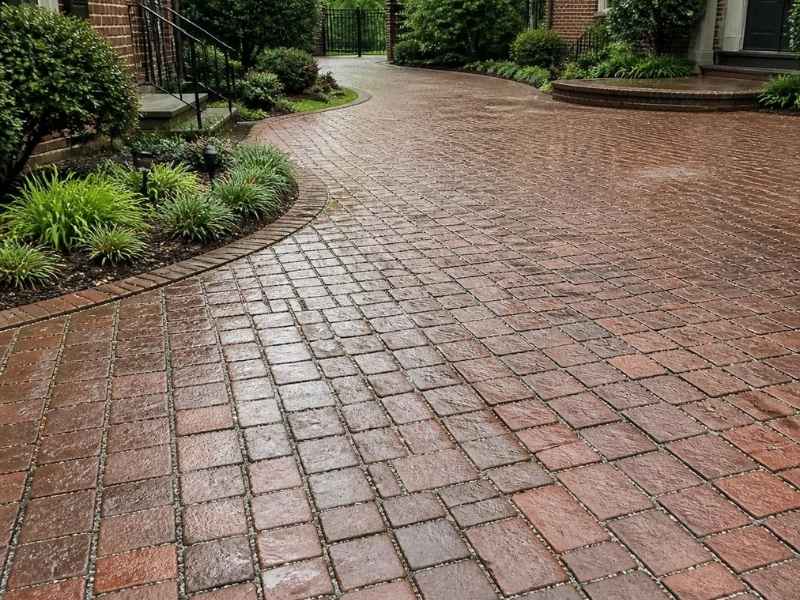
Brick pavers do more than dress up an entryway. In Birmingham, Alabama, where red clay soil sheds water fast and summer storms hit hard, brick pavers can turn a courtyard into a working part of your drainage plan. For developers, that’s a real advantage. You get curb appeal and stormwater performance in one system.
This guide breaks down how permeable brick paver courtyards work, why they fit Birmingham’s soil and climate, and what to check before you build.
Why Permeable Pavers Make Sense in Birmingham
Birmingham sits on clay-heavy soil. Clay doesn’t drain well on its own. Add the region’s heavy spring and summer rainfall, and standard concrete or solid pavers can send water straight into the street or pool at your front door.
Permeable brick pavers change that. Water moves through the joints between pavers and into a gravel base below. From there, it filters into the ground slowly instead of rushing off the site.
Local Stormwater Rules Matter
Jefferson County and the City of Birmingham both enforce stormwater management standards for new development. Many projects now need to show how they’ll handle runoff before a permit gets approved. A permeable entry courtyard can help meet those requirements without eating up extra land for a retention pond.
How a Permeable Brick Paver System Works
A permeable courtyard isn’t just brick on sand. It’s a layered system built to move and store water.
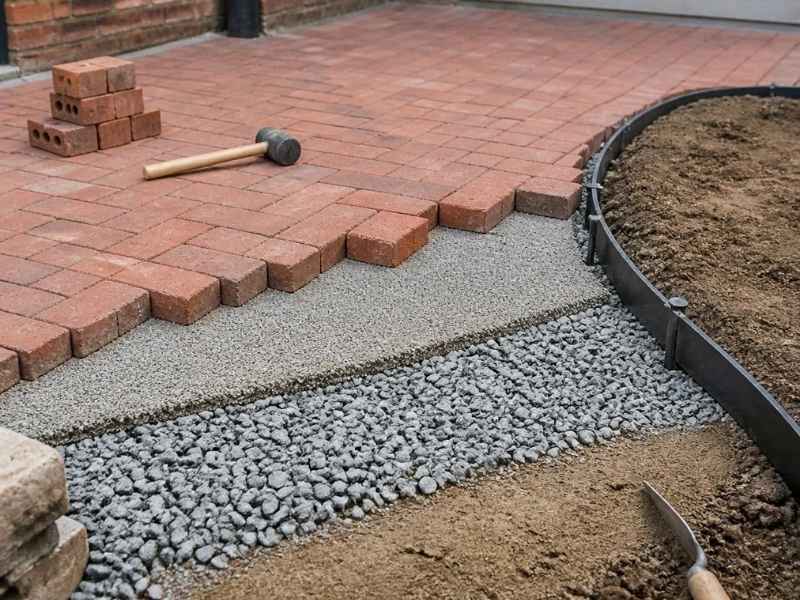
The Layers, From Top to Bottom
- Brick pavers with open joints, spaced wider than a standard patio
- Bedding layer of small, clean stone that lets water pass through fast
- Base layer of larger crushed stone that stores water temporarily
- Subbase that connects to native soil or a drainage outlet
Each layer has a job. The pavers handle foot and light vehicle traffic. The stone layers hold water until the ground can absorb it. Skip a layer or use the wrong stone size, and the whole system backs up.
Joint Material Matters
Standard sand joints don’t work for permeable design. Use open-graded, angular stone in the joints instead. It locks the pavers in place while still letting water pass through.
Choosing the Right Brick Pavers for the Job
Not every brick paver is rated for permeable use. Look for pavers built with spacer bars or lugs on the sides. These create consistent gaps between units so water has somewhere to go.
Load Rating
Entry courtyards often carry more than foot traffic. Delivery trucks, moving vans, and the occasional car need a paver rated for vehicle loads, not just pedestrian use. Ask your supplier for the load rating before you order.
Color and Finish
Birmingham’s older neighborhoods, from Forest Park to Mountain Brook, tend to favor traditional red and clay-tone brick. A tumbled or worn finish blends into historic districts better than a sharp, factory-new look. Match the finish to the surrounding architecture, not just the building itself.
Site Prep: Where Most Projects Go Wrong
A permeable courtyard fails when the ground underneath isn’t ready for it, not when the pavers are bad.
Test the Soil First
Birmingham clay compacts hard and drains slowly. Before design work starts, run an infiltration test on the site. This tells you how fast water actually moves through the soil, not just how it looks on a map. Skipping this step is the top reason permeable systems clog or pond within a year or two.
Grade Away From the Building
Even a permeable surface needs a slight slope, usually 1 to 2 percent, moving water away from the foundation. Permeable pavers slow water down. They don’t replace good grading.
Avoid Compacting the Subsoil
Heavy equipment driving over the future courtyard area before construction can compress the soil underneath. Compressed soil won’t absorb water, even with a perfect paver system on top. Mark off the area early and keep equipment out.
Maintenance Developers Should Plan For
Permeable pavers need more upkeep than solid concrete, but less than people expect.
- Vacuum sweep the joints twice a year to clear dirt and debris
- Avoid sealing the joints with sand or caulk after installation
- Keep landscaping mulch and soil from washing onto the pavers
- Check for standing water after heavy rain and address low spots early
Build a maintenance plan into the property management contract before handoff. A neglected permeable system clogs within a few years and stops working the way it was designed to.
Cost Considerations for Birmingham Projects
Permeable brick paver courtyards cost more upfront than asphalt or standard concrete, often 20 to 40 percent more depending on the base depth required. But they can lower long-term costs by reducing the size of stormwater detention infrastructure elsewhere on the site. For infill lots with limited space, that trade-off often pencils out in favor of pavers.
Bringing in a Civil Engineer Early
Permeable paver design isn’t just a landscaping decision. Base depth, soil infiltration rates, and stormwater compliance all need engineering input. Bringing a civil engineer in during early site planning, not after the permit gets rejected, saves time and redesign costs.
Frequently Asked Questions
Do permeable brick pavers work in Birmingham’s clay soil?
Yes, but the base layer needs to account for slow infiltration. A deeper gravel base or a connection to a drainage outlet often works better than relying on the clay soil alone to absorb water.
How much do permeable brick paver courtyards cost compared to concrete?
Expect to pay 20 to 40 percent more upfront than standard concrete. The added cost comes from the layered stone base and specialized pavers, not the labor.
Can permeable pavers handle vehicle traffic?
Yes, if you choose pavers with a vehicle load rating and build the base to the correct depth. Pedestrian-rated pavers will crack or shift under regular car traffic.
How often do permeable paver joints need cleaning?
Twice a year is standard. Vacuum sweeping removes dirt and debris before it clogs the joints and slows drainage.
Do permeable pavers help meet Birmingham stormwater requirements?
They can. Many projects use permeable paver areas to offset runoff calculations required by Jefferson County and City of Birmingham stormwater codes. Check current local requirements before finalizing your drainage plan.