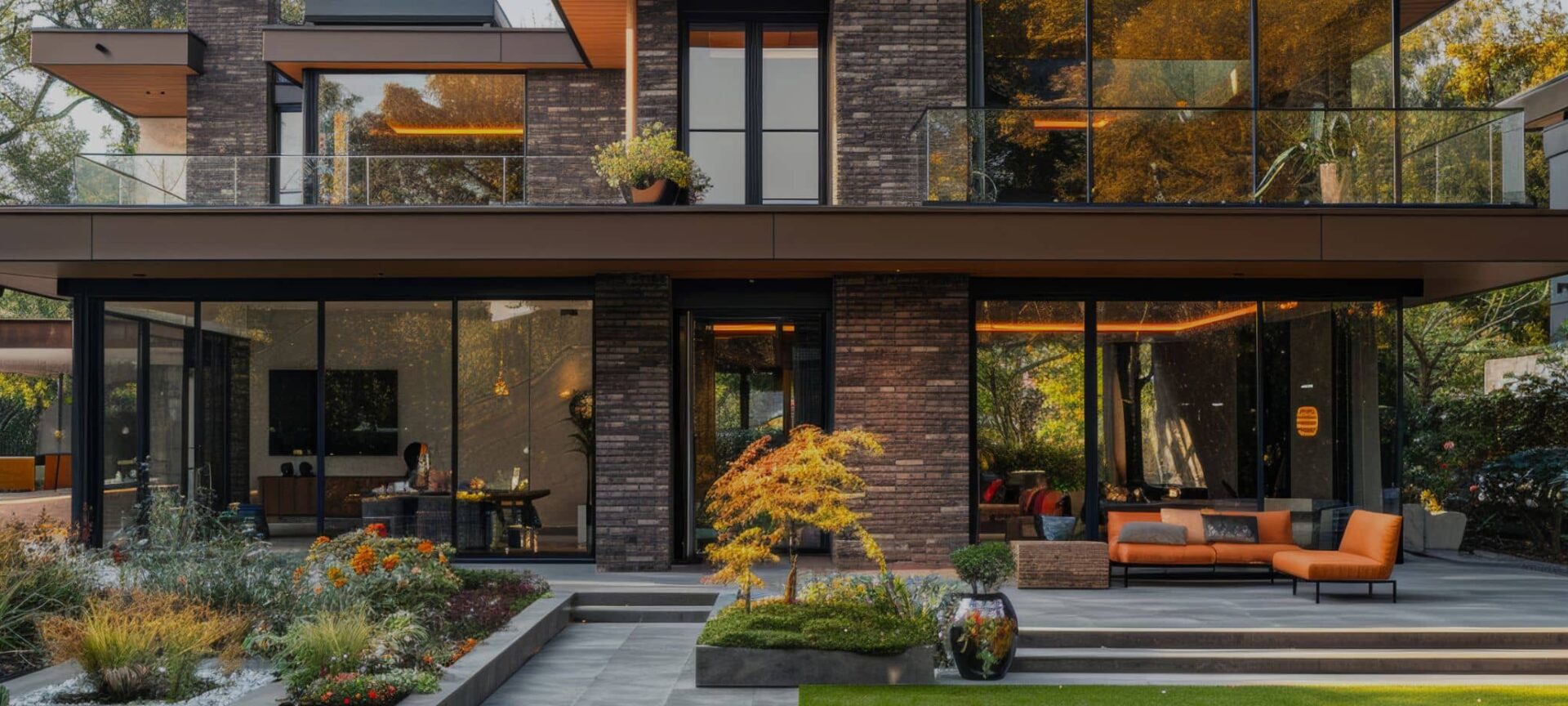
A stone patio that meets the lawn and planting beds with a well-built edge stays crisp for years and is much easier to keep up. The edge is where most patios start to look tired. Grass creeps over the stone, mulch washes onto the surface, and the outer row of pavers slowly drifts loose.
Plan the edges at the same time as the patio itself. Shape, height, drainage, and edge support all affect how the border holds up. Treating the edge as an afterthought usually means fixing it within a few seasons.
Planning Stone Patio Edges Along Lawn and Garden Areas
Start by walking the patio outline and noting what sits next to each side. A lawn edge, a planting bed, and a walkway each need a slightly different approach. Mark where mowers will run, where mulch will sit, and where people step off the patio most often.
Think about how the patio connects to the rest of the yard. A border can lead into a garden path, frame a seating area, or run toward an outdoor kitchen or outdoor fireplace. Matching or contrasting the edge material helps those spaces feel linked.
Check existing masonry before choosing materials. If the house has brick steps or a brick patio nearby, a brick border around stone can tie the two together. Stone edging can suit homes with stone accents or a nearby retaining wall.
Choosing Edge Shapes for Straight and Curved Planting Beds
Straight edges suit formal yards and geometric beds. They’re quicker to lay out and work well with cut stone or brick borders. Curved edges feel softer and fit naturally around flowing beds and mature trees.
Curves take more planning. Irregular flagstone follows a curve easily, while cut stone or brick pavers need careful cutting to keep the line smooth. Lay out the curve with a garden hose or rope and live with it for a day or two before the stone patio edge is set.
Skip tight, wiggly curves that are hard to mow or trim. Broad, gentle arcs look cleaner and wear better. A border course of brick or stone along the curve gives the edge a finished look and helps hold the patio in place.
Creating Smooth Transitions Between Stone Surfaces and Grass
The patio surface should sit close to the lawn level so mowers can run along the edge. A small difference keeps grass from growing over the stone without creating a trip hazard. Many homeowners add a flat mowing strip of brick or stone at grass level to make trimming easier.
Stone and grass don’t share space well. Roots and runners will push into joints and gaps along the edge. A clean break, such as a mowing strip, a shallow trench, or a border course, keeps the two apart.
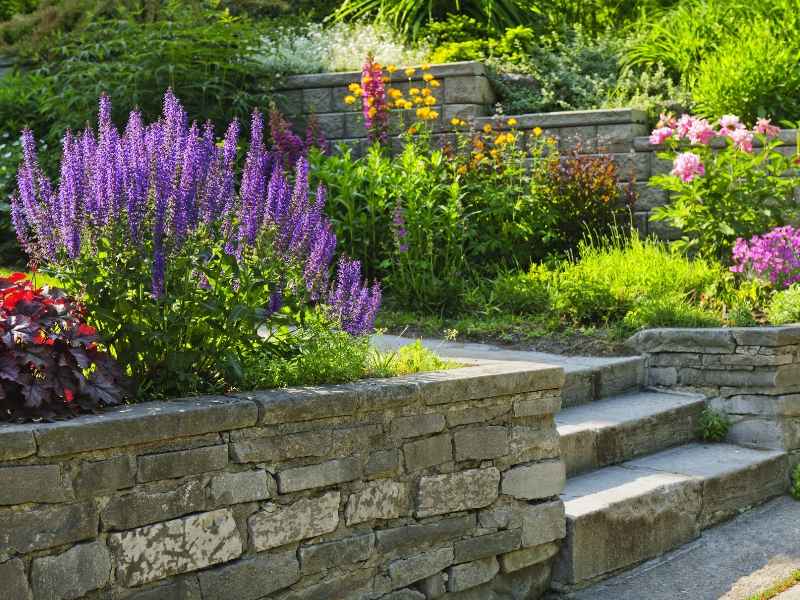
Where the stone patio meets a planting bed, plan for mulch and soil. The bed should sit slightly below the patio surface so soil doesn’t wash onto the stone. A raised border or low stone wall can hold back beds that sit higher than the patio.
Managing Drainage and Soil Levels Along Stone Patio Borders
Water needs a clear path off the patio. The surface should slope gently away from the house and toward the lawn or a drain area. Edges that sit higher than the ground around them can trap water on the patio, while edges that sit too low let runoff pour in.
Planting beds along the edge can collect water from the patio. Some plants like that, but it can also wash mulch away or drown roots. Group plants that handle wet soil near the low points, or add a gravel strip to slow the flow.
Soil levels shift over time. Mulch gets added each year, lawns thicken, and beds creep higher than planned. Check the grade along the edges every season and pull soil back if it starts to bury the stone. If the yard slopes toward the patio, regrading or a short retaining wall may help, though the right fix varies with the site.
Securing Stone Patio Edges for Long-Term Stability
Patio edges move when nothing holds them in place. Foot traffic, frost, and wet soil push outer stones outward over time. An edge restraint, such as a concrete beam, buried metal or plastic edging, or a mortared border, keeps the field of stone tight.
Base preparation matters most at the edge. The compacted gravel base should extend past the outer stones so the border has support underneath. A base that stops right at the edge leaves the outer row sitting on soft soil.
Mortared and dry-laid edges both work. Mortared borders give a crisp, permanent look, while dry-laid edges are easier to adjust and repair. The right choice comes down to the patio design, the stone type, and how much maintenance you want.
Frequently Asked Questions
What is the best edging for a stone patio next to grass?
Mowing strips of brick or stone and concrete edge restraints are common choices. They keep grass out of the joints and give mowers a clean line to follow. Buried metal or plastic edging can work for dry-laid patios. The best option varies with the patio style, stone type, and budget.
Should the patio be higher than the lawn?
The patio usually sits level with or just slightly above the lawn. That height keeps grass from creeping onto the stone and lets water drain off the surface. Too much height can create a trip edge. Your mason can set the level based on your yard’s slope and drainage.
How do I keep mulch and soil off my patio?
Set planting beds slightly below the patio surface. A raised border or low wall can hold back beds that sit higher. Keep mulch pulled back from the edge and don’t pile it too high. Regular sweeping keeps any spillover from staining the stone.