A masonry contractor sees the same fire pit problems over and over. The pit sits too close to the house, the chairs don’t fit, and the stone patio around it starts sinking after the first wet season. Most of those issues come from decisions made before the first stone was set.
A fire pit area takes heat, foot traffic, and plenty of rain. The patio around it needs a solid base, the right materials, and a plan for water. Get those right during planning, and the space will stay level, safe, and easy to use for years.
Masonry Contractor Tips for Fire Pit Placement and Seating
Start with where the fire can safely go. Keep the pit away from the house, decks, fences, overhanging trees, and anything else that burns. Required distances vary by local code, fire rules, HOA, and product instructions, so confirm them before you pick a spot.
Wind matters too. Smoke follows the breeze, and a pit placed upwind of the back door will send smoke straight into the house. Watch how the wind moves through the yard before you settle on a location.
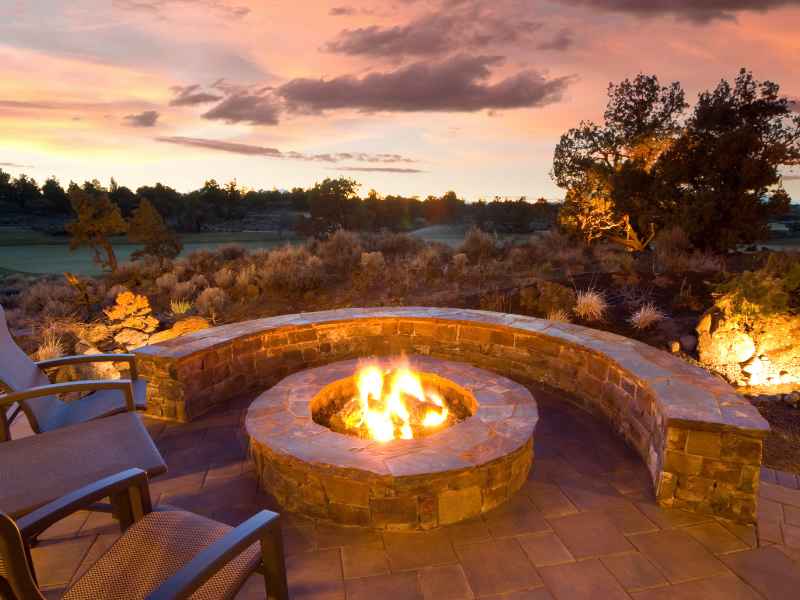
Seating needs more space than people expect. Chairs should sit back far enough to stay comfortable when the fire is going, with room to walk behind them. Sketch the full circle, including the walking path, before you decide how large the stone patio needs to be.
Preparing a Stable Patio Base Around the Fire Pit
The base decides how long the patio stays flat. Most stone patio failures start below the surface, where soft soil or a thin base lets stones settle and rock. Heavy fire pit walls make the problem worse if the ground under them isn’t ready.
A typical build starts with excavation down to firm soil. Crushed stone base goes in next, placed and compacted in layers. The stone or paver surface then sits on a bedding layer or a mortar bed, depending on the design.
Clay soils that hold water need extra attention. Poorly drained ground can heave, soften, or settle unevenly. Base depth and materials depend on the soil, the slope, the stone, and how the patio will be used.
Selecting Heat-Appropriate Stone With a Masonry Contractor
Not every stone handles fire well. Some stones that hold moisture, such as certain river rocks, can crack or pop when heated. The inside of the pit should be lined with firebrick, a steel ring, or another material rated for direct heat.
The patio near the pit faces less heat but still takes some. Dense natural stone, many stone pavers, and brick pavers can all work around a fire pit when installed well. The best choice depends on appearance, traffic, maintenance, existing masonry, and budget.
Mortar matters as much as stone. Joints inside the firebox may need a heat-rated mortar, while the patio and outer walls can use standard materials. Ask your mason which products go where and why.
Masonry Contractor Approach to Drainage and Edge Restraints
Water has to leave the patio. The surface should slope gently away from the house and the fire pit so rain doesn’t pool. Standing water softens the base and leads to settling.
The fire pit needs its own drainage plan. A pit that holds water turns into a soggy mess of wet ash and can damage the masonry over time. Many builds include a gravel bottom or drain path so rainwater can escape.
Edge restraints keep the patio from spreading. Without them, the outer stones and pavers slowly push outward and the joints open up. Common options include a mortared border, a brick soldier course, or a concrete edge set below the surface.
Finishing Fire Pit Transitions for Safe Access and Long-Term Stability
Transitions are where people trip. The step from a lawn, walkway, or existing brick patio onto the fire pit area should be clear and even. Small height changes of an inch or two catch toes more often than full steps do.
On sloped yards, the fire pit area may need steps or a low retaining wall to create a level space. Those features need the same base and drainage care as the patio itself. Planning them together keeps the layout clean and avoids awkward patches later.
Think about how the fire pit area connects to the rest of the yard. A walkway to the outdoor kitchen, outdoor fireplace, or back door should be wide enough for two people and easy to see at night. Low lighting along paths and steps helps a lot after dark.
Frequently Asked Questions
How far should a fire pit be from my house?
That depends on local code, fire rules, HOA rules, and the product instructions. Many guidelines call for a clear distance from structures and overhanging branches. Check with your local fire or building office before you choose a spot. Your mason can help plan the layout once you know the limits.
Can I build a fire pit on an existing patio?
Sometimes, if the patio has a solid base and the surface can handle the heat. Some older patios aren’t built for the weight of a masonry fire pit. A mason should check the base and the stone before you add one. Adding a fire pit to a weak patio often leads to cracking.
What stone works best around a fire pit?
There isn’t one best choice for every yard. Dense natural stone, stone pavers, and brick pavers can all work when installed well. The inside of the pit should use firebrick or a steel liner. Match the patio stone to your home’s look, traffic, and budget.