
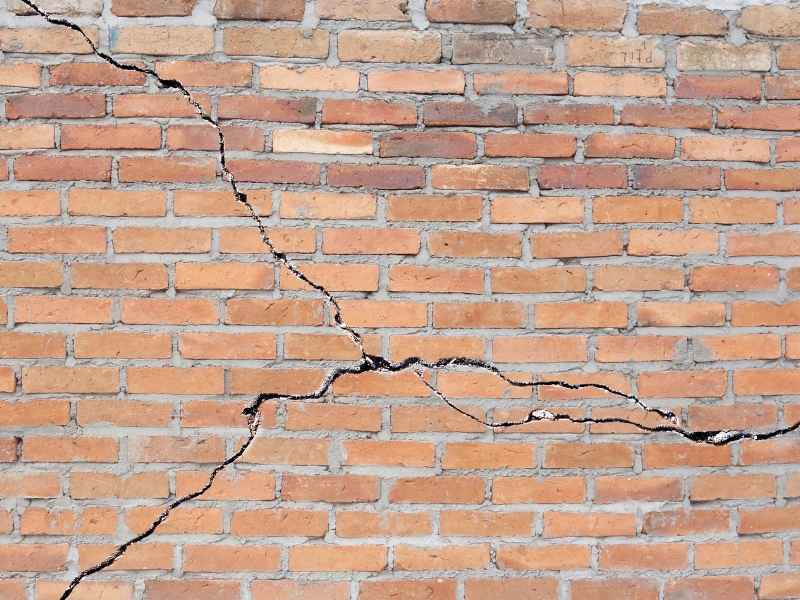
A masonry contractor understands that the brick above a garage door spans a very wide gap. Most of that weight rides on a steel angle called a lintel, and when the lintel, the mortar, or the ground below starts to struggle, the brick shows it first. A cracked joint or two may be cosmetic, but some crack patterns around a garage point to problems that get more expensive every season they’re ignored.
This guide is for homeowners trying to figure out how serious their garage brick cracks are. The short answer is that hairline mortar cracks can often wait for routine repair, while sagging brick, growing stair-step cracks, or rust stains near the lintel deserve a look from a masonry contractor soon. Write down what you see and when you first noticed it, because that history helps whoever inspects the wall.
Common Causes of Brick Cracking Around Garage Openings
Most garage brick cracks trace back to a handful of causes. The wide opening puts more stress on the surrounding masonry than a typical window or door does. These are the usual suspects:
- A rusting steel lintel that expands and pushes the brick above it
- A lintel that bends slightly under the load over a wide opening
- Settlement or movement in the foundation or the soil beneath it
- Thermal expansion in long brick walls without enough room to move
- Vehicle bumps against the jambs, which are the brick sides of the opening
- Water getting into the wall through missing flashing or failed mortar
Rust deserves extra attention. Steel swells as it rusts, and that growth can lift bricks and crack joints at the corners of the opening. Water is usually the trigger, which is why many lintel problems start with poor flashing or clogged weep holes.
Identifying Crack Patterns That May Indicate Structural Movement
Crack patterns tell you a lot about what’s happening behind the brick. A crack that follows the mortar joints in a stair-step shape often points to settlement or movement, especially when it runs from a corner of the garage opening. Horizontal cracks along the lintel line, or brick that seems to lift at the ends of the opening, often go with lintel rust.
Some signs suggest movement rather than surface wear. Any one of them is a reason to get the wall checked. Pay closer attention when you see:
- Cracks that are wider at one end than the other
- Brick above the door that sags or dips in the middle
- Cracks that run through bricks instead of only the mortar
- Gaps opening between the brick and the garage door frame or trim
- Cracks that grow or reopen after a repair
Track a crack before deciding it’s harmless. Masonry contractor Mark the ends with a pencil and a date, or take photos with a ruler in the frame every few months. If it grows, that record is useful evidence for a mason or engineer.
When a Masonry Contractor Should Inspect Garage Brick Damage
Call for an inspection as soon as you see sagging brick, cracks through the brick itself, or cracks that keep growing. Those signs suggest the wall is still moving or the support above the opening is failing. Waiting can turn a manageable lintel repair into a larger rebuild.
A good mason will look at the lintel ends, the mortar, the flashing and weep holes, and the brick near the foundation. They should explain the likely cause before recommending a repair, since patching the symptom rarely holds. Ask how they reached their conclusion and what they’d watch for afterward.
Some problems belong to a structural engineer. If the cracking points to foundation settlement or soil movement, a mason may recommend an engineering evaluation before repair work starts. That step costs money up front, but it keeps you from repairing brick on top of a problem that’s still active.
Masonry Contractor Choosing Appropriate Repairs for Cracked Bricks and Mortar Joints
The right repair depends on the cause and the extent of the damage. Small cracks in mortar joints are usually handled by repointing, also called tuckpointing. The mason grinds out damaged mortar to a set depth and packs in fresh mortar that matches the color and strength of the original.
Mortar strength matters more than most people expect. Mortar that’s harder than the brick can force future cracks into the bricks themselves. A mason should choose a mix that suits your brick, especially on older homes.
Bricks that are cracked through or spalling, which means the face is flaking off, can be cut out and replaced with matching units. Lintel problems usually call for removing the brick above the opening, cleaning and coating or replacing the steel, and adding flashing before relaying the brick. It’s a bigger job, but it treats the cause.
Skip caulk and surface patches over structural cracks. They hide the problem and can trap water behind the face of the wall. They also make the eventual repair harder, because the mason has to remove them first.
Preventing Moisture Damage and Recurring Cracks Around the Garage
Water is behind a large share of recurring garage brick problems. Keep it out of the wall, and many cracks never come back. Flashing above the garage lintel should direct water out through small openings called weep holes, and those openings need to stay clear.
Walk around the garage after a storm. Gutters that overflow above the door, downspouts that dump next to the foundation, and ground that slopes toward the garage all push water where it doesn’t belong. Fixing grading and drainage is often cheaper than repeating brick repairs every few years.
Ask your mason about expansion joints if long walls keep cracking in the same spots. These are planned gaps filled with flexible sealant that let brick move without breaking. Water repellents can help some walls, but they should be breathable masonry products, since a coating that seals moisture in can cause new damage.
Frequently Asked Questions
Are hairline cracks in garage brick a problem?
Small hairline cracks in mortar are common and often cosmetic. They still let water in over time, so they’re worth repointing during routine maintenance. Track them with photos to make sure they aren’t growing. If they widen or spread, have the wall inspected.
Why is the brick above my garage door sagging?
Sagging brick above a garage door usually points to a lintel problem. The steel may be rusting, bending, or losing support at its ends. This repair should be scheduled soon, since the brick can keep dropping. A mason can confirm the cause and explain your options.
Can I repair cracked mortar myself?
Small repointing jobs are possible for experienced homeowners, but matching mortar color and strength is harder than it looks. The wrong mix can make cracking worse or leave visible patches. Cracks tied to lintels or movement should go to a professional. If you’re unsure of the cause, get an inspection before doing any work.