
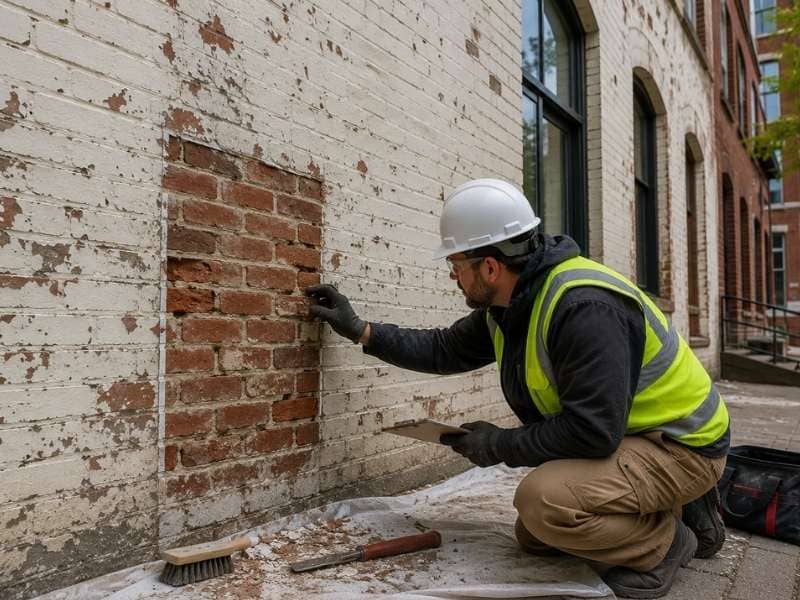
Painted brick is a common feature in older buildings being converted for new uses, but it deserves careful evaluation before renovation begins. Layers of paint can conceal masonry deterioration, affect how moisture moves through the wall, and influence the best approach for repairs or refinishing. Proper preparation helps assess the condition of the brick, mortar, and existing coatings while guiding decisions about cleaning, repairs, or paint removal. Addressing these conditions early supports a more successful adaptive reuse project and helps reduce the risk of unexpected masonry issues during construction.
Why Painted Brick Needs Special Attention
Painted brick behaves differently than bare brick. Brick is meant to breathe, letting small amounts of moisture pass in and out. Paint can seal that surface and trap water inside the brick, where it does damage over freeze and thaw cycles. On an old building, decades of paint may have already caused harm you can’t see from the street. The wall can look fine and still be quietly failing underneath.
For a reuse project, this matters because you’re planning to keep the building for a long time. The paint decision affects whether the walls stay dry and sound for years to come. It also affects the look you can achieve, since exposed brick and painted brick send very different messages. Understanding what the paint is doing to the brick is the first step before you choose how to handle it. Skip that understanding and you may lock in a moisture problem for the life of the building.
Checking the Condition Under the Paint
Before deciding anything, you need to know what’s beneath the paint. A close inspection checks whether the brick under the coating is solid or already crumbling. Paint can mask soft, spalling brick and failing mortar, so the surface tells you little on its own. Finding this early keeps you from building a new interior against a wall that’s quietly falling apart.
Moisture is the key thing to check. Damp spots, bubbling paint and white mineral stains all hint at water trapped in the wall. That white residue, called efflorescence, is a clear sign that water is moving through the masonry. A reuse project should sort out any moisture problem before the finish work starts, because water trapped behind new walls causes rot and mold. Knowing the true condition lets you plan repairs into the budget instead of hitting them as surprises mid-project.
Deciding to Strip, Keep, or Repaint
The big choice is what to do with the paint, and there’s no single right answer. Stripping the paint can bring back the natural brick look many reuse projects want. It also lets the brick breathe again, which helps the wall shed moisture. The catch is that stripping is slow, costly and can harm soft old brick if done with the wrong method. On some historic brick, aggressive stripping does more damage than the paint ever did.
Keeping the paint is sometimes the smarter call. If the paint is sound and the brick under it is stable, leaving it alone avoids damage and cost. Repainting with a breathable masonry paint is a middle path that refreshes the look while letting some moisture escape. The right choice depends on the brick’s condition, the look the project needs and the budget you have. A good plan weighs all three instead of defaulting to a full strip because bare brick is in style.
Removing Paint Safely
If you decide to strip, the method matters as much as the goal. Harsh methods like heavy sandblasting can tear the hard outer face off old brick, leaving it soft and open to water. That damage is permanent and turns a cosmetic job into a decay problem. Gentler methods, such as chemical strippers made for masonry, remove paint while sparing the brick. The goal is clean brick, not damaged brick.
Old paint brings a safety concern too. Buildings painted decades ago may have lead paint, which is hazardous when disturbed. Removing it kicks up dust and chips that are dangerous to workers and anyone nearby. It calls for the right safety steps and often a trained crew that follows lead-safe rules. Planning for safe, careful removal protects both the workers and the brick you’re trying to save, and it keeps the project clear of health and legal trouble.
Prepping the Surface for Its New Life
Once the paint question is settled, the brick needs prep for whatever comes next. This usually means repairing damaged brick and mortar so the wall is sound. Repointing failed joints seals the wall against water and brings back its strength. Clean, solid masonry is the base for any finish you add, so this step can’t be rushed.
The final prep depends on the plan for the wall. Bare brick that will stay exposed needs cleaning and sometimes a breathable sealer to shed water without trapping it. Brick that will be painted or coated needs a surface the new finish can grip. Matching the prep to the end use makes the finish last and keeps the old wall working for years to come. Done right, the prep is what lets a century-old wall serve a brand new purpose.
Frequently Asked Questions
Should painted brick be stripped during adaptive reuse?
It depends on the brick’s condition and the look you want. Stripping restores the natural brick and lets it breathe, but it’s costly and can harm soft old brick. If the paint is sound, keeping or repainting it is often the safer and cheaper choice.
Why is painted brick a problem on old buildings?
Paint can seal the brick and trap moisture inside, which leads to damage through freeze and thaw. Brick is meant to breathe. When paint blocks that, water stays in the wall and slowly breaks the brick down from within.
How do I know what condition the brick is in under the paint?
A close inspection looks for soft or crumbling brick, failing mortar and signs of trapped moisture like bubbling paint or stains. This check tells you whether the wall needs repair before the reuse work goes forward, so you can budget for it.
What is the safest way to remove paint from old brick?
Gentle methods work best. Chemical strippers made for masonry remove paint while sparing the brick face. Harsh methods like sandblasting can destroy the hard outer surface. Old paint may also contain lead, so safe handling is a must for the crew.
Can painted brick be repainted instead of stripped?
Yes. If the brick is stable, repainting with a breathable masonry paint refreshes the look while still letting some moisture escape. This is often cheaper and gentler than a full strip, and it avoids the risk of damaging soft brick.