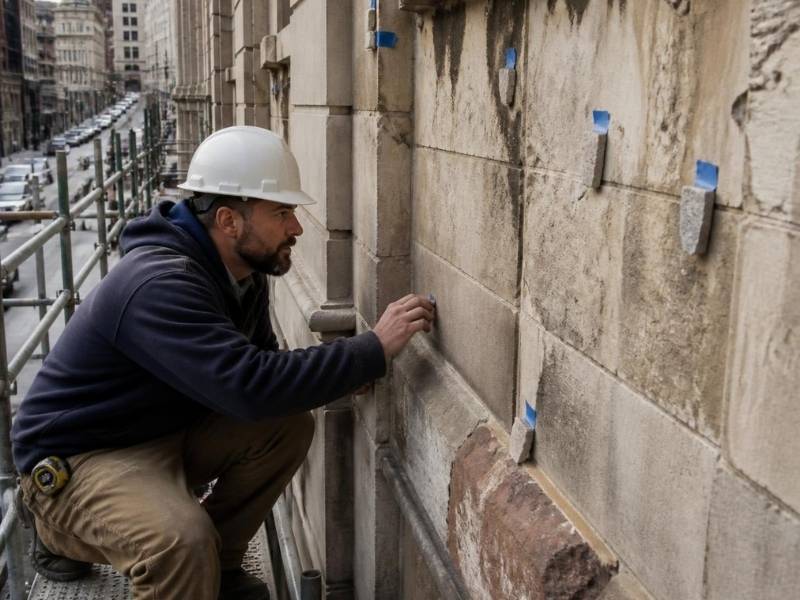
Stone mason planning can make or break a historic facade project. Birmingham has blocks of limestone, sandstone, and terra cotta buildings from the early 1900s, and most of them weren’t built with today’s construction methods in mind. Bring in a stone mason too late, and you end up with mismatched repairs, code violations, or a redesign that costs more than the original bid.
This guide covers what developers need to line up before restoration work starts on a historic facade in Birmingham.
Why Stone Mason Input Comes Before the Architect’s Final Drawings
Most developers bring in an architect first and a mason later. On a historic facade, that order causes problems.
A stone mason can tell you which stone is original, which is a past repair, and how the material behaves after a century of weather. That information changes what an architect can safely design around. Skip this step, and you risk drawings that call for details the existing stone can’t support.
Stone Assessment Comes First
Before any design work starts, a mason should walk the building and document:
- Stone type and source, if it can be identified
- Cracking patterns and their likely cause
- Mortar joint condition and mortar type
- Areas of past repair, including mismatched patching
- Water damage and staining patterns
This assessment becomes the reference point for every decision that follows.
Matching Historic Mortar Is Harder Than It Sounds
Modern Portland cement mortar is too hard for most historic stone and brick. It doesn’t flex the way older lime-based mortar does. Over time, hard mortar forces the surrounding stone to crack instead of the joint absorbing the movement.
Get a Mortar Analysis Done
A lab analysis of the original mortar tells you the lime-to-sand ratio and any additives used at the time. Matching that mix, not guessing at it, keeps new repairs from damaging the stone around them. Skipping this step is one of the most common and expensive mistakes on Birmingham restoration projects.
Birmingham’s Building Age Matters
Downtown Birmingham has structures dating back to the 1880s through the 1920s, built during the city’s rise as an industrial center. Mortar formulas changed across those decades. A mason working on a 1905 building needs a different mix than one working on a 1925 structure, even if the buildings sit two blocks apart.
Working With Historic Preservation Requirements
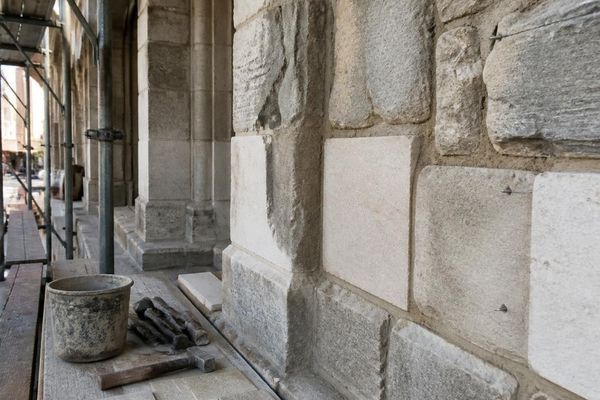
Birmingham has several designated historic districts, and buildings inside them often fall under design review before a permit gets issued. Developers who skip this check find out the hard way, usually after a contractor has already started work.
Know Which Reviews Apply
Depending on the property, a project might need sign-off from local historic preservation staff, and in some cases a state or federal review if tax credits are involved. Each review has different documentation requirements. A stone mason familiar with Birmingham’s preservation process can flag what’s needed before design work locks in.
Tax Credit Projects Have Extra Rules
If the project uses federal or state historic tax credits, the restoration has to follow the Secretary of the Interior’s Standards for Rehabilitation. That means repair over replacement whenever possible, and it means documenting every change with photos and material specs. A mason who has worked on tax credit projects before will already know this drill.
Choosing Repair Over Replacement
Replacing damaged stone is often more expensive and less appropriate than repairing it. A skilled mason can patch, pin, or consolidate damaged stone instead of pulling it out.
When Replacement Is Actually Necessary
Full replacement makes sense when:
- The stone has lost more than half its original thickness to erosion
- Structural cracking threatens the stability of the wall above it
- The original stone type is no longer available and a close match exists
- Water infiltration has damaged the stone beyond what patching can fix
Outside of those situations, repair usually costs less and keeps more of the building’s original material intact.
Sequencing the Work on Site
Facade restoration doesn’t happen in one pass. Getting the order wrong adds cost and rework.
A Practical Sequence
- Stabilize any loose or falling stone first, for safety
- Complete water intrusion repairs before cosmetic work
- Clean the facade using a method suited to the stone type
- Repair mortar joints
- Patch or replace damaged stone sections
- Apply any approved sealants or coatings last
Cleaning before repair matters. It’s hard to match repair color and texture to a dirty facade, and the cleaning process itself can reveal damage that wasn’t visible before.
Budgeting for the Unknowns
Historic facade projects almost always turn up surprises once scaffolding goes up. Hidden water damage, deteriorated anchors, and structural cracks behind decorative stone don’t show up in a street-level walkthrough.
Build a contingency of at least 15 to 20 percent into the restoration budget. Developers who skip this often face a stalled project when the first unexpected repair eats through the entire allowance.
Frequently Asked Questions
When should a stone mason get involved in a historic facade project?
Before the architect finalizes drawings. A mason’s stone assessment shapes what repairs and design details are realistic, so bringing one in early avoids costly redesigns later.
Why can’t I just use standard mortar for historic stone repair?
Modern Portland cement mortar is harder than historic lime-based mortar. It doesn’t flex with the building, which forces cracking into the original stone instead of the joint.
Do all historic buildings in Birmingham need preservation review before restoration?
Not all, but many inside designated historic districts do. Check with local preservation staff before finalizing a permit application, especially if tax credits are part of the project.
Is it better to repair or replace damaged historic stone?
Repair is usually the better option, both for cost and for keeping the building’s original material. Replacement makes sense only when the stone is structurally compromised or too eroded to patch.
How much contingency budget should a facade restoration project include?
Plan for 15 to 20 percent above the base estimate. Hidden damage behind the facade is common once work begins, and a thin contingency can stall a project midway through.