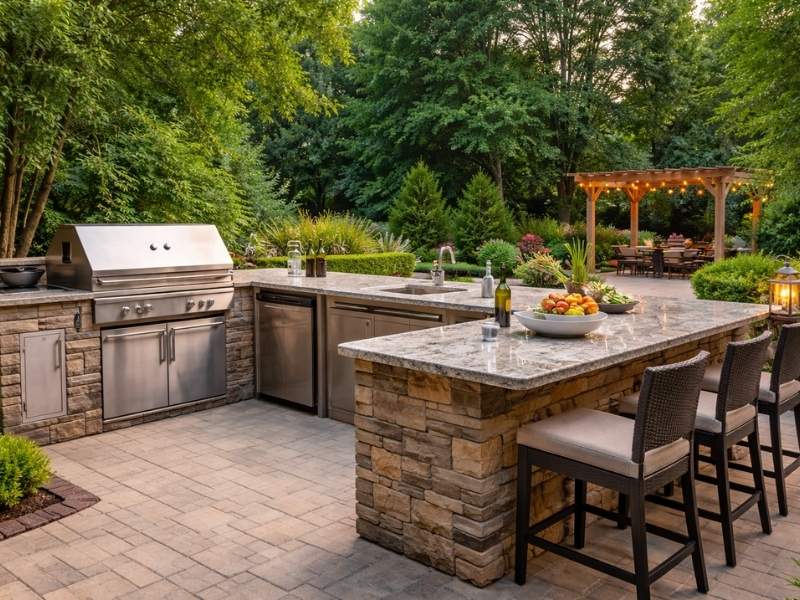
A stone patio can add beauty, function, and value to your outdoor space. With several materials available, choosing the right one depends on factors such as durability, appearance, maintenance, and cost. Understanding your options can help you select a stone patio material that fits your home and lifestyle.
Understanding the Most Popular Stone Patio Materials
There are five stone types you’ll see most often. Here’s what each one looks like and where it works best.
Flagstone is cut from sandstone, limestone, or slate. The pieces come in irregular shapes. It gives a natural, relaxed look. It’s a popular choice for walkways and casual backyard patios.
Bluestone is a dense, blue-gray stone. It has a clean, consistent color. You can get it with a rough texture or a smooth cut finish. It works well in both casual and formal outdoor spaces.
Limestone is light in color. Most pieces are cream or tan. It pairs well with brick homes, which are common across Birmingham. It absorbs less heat than darker stones, so it stays cooler underfoot.
Slate has a dark, layered look. It does well in shaded areas. Too much direct sun over the years can cause it to flake apart.
Travertine is smooth and elegant. It’s often used around pools and covered patios. It stays cooler than most stones even in full sun.
Each stone feels different underfoot. Each one has different care needs and costs. Knowing the basics before you shop saves time and money.
Comparing Durability and Weather Resistance
Birmingham summers are hot and humid. Winters bring cold snaps and occasional ice. Your stone has to hold up through both.
Here’s how each option performs in this climate.
Flagstone is strong under foot traffic. But some types are porous. Water gets in. When it freezes, the surface can crack. Sealing helps. It adds to your yearly upkeep though.
Bluestone is one of the better options for Birmingham. It’s dense. It resists moisture well. It handles freeze-thaw cycles without cracking. It holds up under heavy use year after year.
Limestone is softer than bluestone. It wears down faster in busy areas. Humidity and acid rain can slowly etch the surface. It still works well in shaded or low-traffic spots.
Slate struggles when temperatures swing between hot and cold. In full sun, it can split along its natural layers over time. It’s better suited for covered patios here.
Travertine is porous. Without sealing, moisture gets in. That leads to staining and cracking. With proper sealing, it holds up well in Alabama’s summers.
For most open patios in Birmingham, bluestone and sealed flagstone are the safest bets.
Matching Stone Colors and Styles to Your Home
Stone color shapes the whole look of your yard. A mismatch stands out right away.
Many homes in Birmingham have red brick exteriors. Lighter stones like limestone and travertine go well with brick. They add warmth without clashing. Bluestone also works against brick if you want a modern look.
Darker homes pair well with slate or dark flagstone. These stones add contrast without competing.
Finishing also matters. A smooth (honed) finish looks formal. A rough or tumbled finish looks casual. Think about the rest of your yard. If it’s relaxed and informal, rough-cut flagstone fits. If you have a pool or a neat garden, a smooth cut stone looks better.
Shape plays a role too. Irregular flagstone has a loose, natural feel. Square-cut bluestone or travertine tiles look more structured and clean.
One tip: grab a sample before you order. Look at it outside next to your home. Colors look different under natural light than they do in a showroom.
What Factors Affect the Cost of a Stone Patio Material?
Several things affect what you’ll pay for a stone patio.
Stone type is the biggest factor. Travertine and natural bluestone cost more than basic flagstone. There are manufactured versions of most stones. They cost less but don’t always last as long.
Local availability makes a difference. Stone shipped from far away costs more. Some limestone and flagstone options come from quarries closer to Alabama. That can lower the material cost.
Thickness affects price and strength. Thin slabs cost less but crack more easily. For a busy patio, thicker stone is worth the extra cost.
Installation complexity affects labor costs. Irregular flagstone takes more time to fit than uniform tile. Curved edges or multi-level designs add to the labor bill.
Maintenance is a cost people often forget. Porous stones need sealing every one to two years. That adds up over time. Dense stones like bluestone need far less upkeep.
A low upfront price doesn’t always mean a low total cost. A stone that needs frequent repairs can end up costing more in the long run.
Questions to Ask Before Choosing a Stone Patio Material
These questions help narrow down your best option.
How will you use the patio? Heavy foot traffic needs a harder stone. A quiet garden seating area can work with softer options.
How much sun does the area get? Full Alabama sun gets very hot. Light-colored stones like travertine and limestone stay cooler underfoot. Dark slate gets uncomfortably hot.
Do you need a slip-resistant surface? Smooth finishes look great but get slippery when wet. If kids or older adults will use the space, choose a textured or rough surface.
How does the area drain? Poor drainage causes water to pool. That speeds up damage on porous stones. Make sure your mason grades the patio to drain properly.
How much maintenance will you actually do? Be honest. If you won’t reseal every year, don’t pick a stone that needs it. Bluestone is a solid low-maintenance choice.
How long do you want it to last? A properly installed natural stone patio can last 25 to 50 years. Manufactured stone products don’t always last as long outdoors.
Ask your mason these questions before you commit. A good contractor will match the material to your lifestyle, not just to what looks nice in a photo.
Frequently Asked Questions
What Is the Best Type of Stone for a Patio?
Bluestone and flagstone are strong choices for Birmingham. They handle heat, humidity, and cold well. The best pick depends on your design goals, budget, and maintenance preference.
Which Stone Patio Material Is the Most Durable?
Bluestone is one of the most durable options. It’s dense, resists moisture, and holds up under heavy use. Granite is harder but costs more and is less common for home patio projects.
Do Natural Stone Patios Require a Lot of Maintenance?
It depends on the stone. Bluestone needs very little care. Porous stones like travertine need sealing every one to two years to prevent staining and water damage.
What Factors Affect the Cost of a Stone Patio?
Stone type, thickness, local availability, installation complexity, and long-term maintenance all affect cost. A cheaper stone with high upkeep can end up costing more over time.
How Long Does a Natural Stone Patio Typically Last?
A well-installed natural stone patio can last 25 to 50 years or more. Lifespan depends on the stone type, installation quality, and ongoing maintenance.