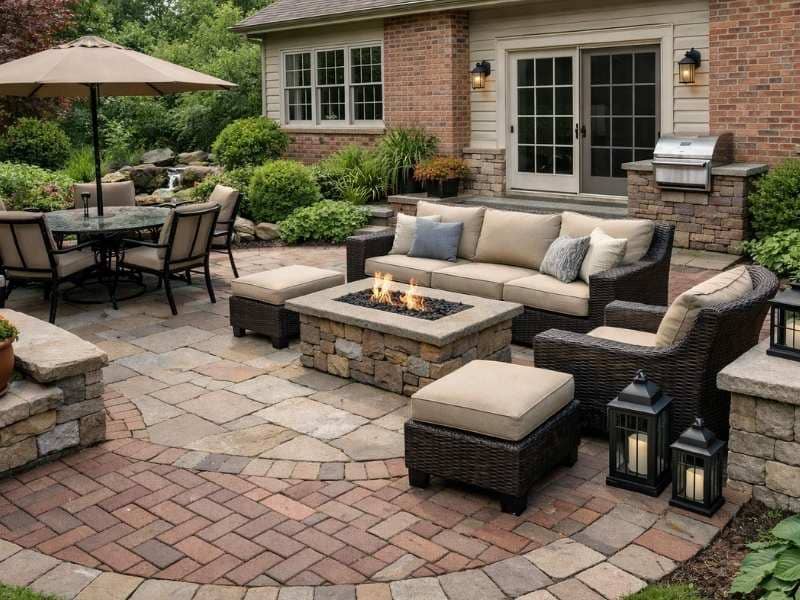
Planning a new patio is a big decision. There are a lot of materials to choose from, and it can be hard to know where to start. Brick pavers and stone pavers are two of the most popular options for homeowners, and both are great choices. The right one for you depends on your budget, where you live, and the look you want.
What Is the Difference Between Brick Pavers and Stone Pavers?
Brick pavers are made from fired clay. They are cut into the same size and shape, so they fit together neatly and evenly. Stone pavers are cut from natural rock, such as granite, limestone, flagstone, or travertine. Since they come from the earth, no two pieces look exactly the same.
Both are strong and hold up well outdoors. The main difference is how they look, what they cost, and how much work they need to stay in good shape over the years.
Brick Pavers: What Homeowners Need to Know
Brick pavers are a popular mid-priced option that gives any patio a warm, classic look.
Appearance and Style
Brick pavers come in earthy shades of red and brown. They look great with traditional, colonial, and craftsman-style homes. Because all the pieces are the same size, they can be laid in neat patterns like herringbone, basketweave, or running bond.
Over time, brick pavers develop a natural faded look that many homeowners actually like. It gives the patio a lived-in, charming feel.
Durability and Lifespan
Brick pavers are baked at very high heat during manufacturing. This makes them hard, dense, and resistant to cracking. A well-built brick paver patio can last 25 to 50 years. If one paver cracks or shifts, you can lift it out and replace just that piece without touching the rest of the patio. This makes repairs simple and affordable.
Cost of Brick Pavers
Brick pavers cost between $8 and $20 per square foot, including installation. The price depends on where you live, the pattern you choose, and the size of the project. Brick pavers cost more than basic concrete, but less than most natural stone options.
Maintenance
Brick pavers need to be sealed every three to five years. Sealing protects them from water and stains. This is especially important in places with cold winters. When water soaks into unsealed pavers and then freezes, it can cause cracks. Weeds or moss may grow in the gaps over time, but they are easy to remove with regular cleaning or a special type of sand called polymeric sand.
Stone Pavers: What Homeowners Need to Know
Stone pavers cost more than brick, but they offer a high-end, natural look that is hard to match.
Appearance and Style
The biggest advantage of stone pavers is that every piece looks different. Each one has its own color, texture, and pattern. This gives a stone patio a unique, natural look that no two homes will share exactly.
Popular types of stone pavers include:
- Flagstone for a relaxed, rustic feel
- Granite for a clean, modern look
- Travertine for a warm, Mediterranean style
- Limestone for a soft, neutral tone that works with almost any home
If you want a patio that looks like a natural part of your yard, stone pavers are the way to go.
Durability and Lifespan
Natural stone is one of the toughest materials you can use outdoors. Most stone pavers last well beyond 50 years when they are installed correctly. Hard stones like granite can handle almost any weather. Softer stones like limestone need a little more care in wet or freezing climates, but they still hold up well with the right maintenance.
Cost of Stone Pavers
Stone pavers cost between $15 and $50 per square foot installed. Flagstone and limestone are on the lower end. Granite and imported travertine can cost more. Stone costs more than brick for two reasons. First, natural stone is a premium material. Second, it takes more skill and time to install because the pieces are heavier and less uniform.
Maintenance
Like brick, stone pavers need to be sealed every three to five years. Hard stones like granite need less attention. Softer stones like travertine do better with more frequent sealing, especially in rainy areas. Light-colored stone can stain, so it helps to clean up spills quickly.
Brick Pavers vs. Stone Pavers: Side-by-Side Comparison
| Feature | Brick Pavers | Stone Pavers |
| Material | Fired clay | Natural stone (granite, limestone, flagstone, travertine) |
| Installed Cost | $8 to $20 per sq. ft. | $15 to $50 per sq. ft. |
| Appearance | Uniform, classic, warm tones | Natural variation, high-end look |
| Lifespan | 25 to 50 years | 50+ years |
| Sealing Frequency | Every 3 to 5 years | Every 3 to 5 years |
| Best Climate | Most climates with proper sealing | Best in mild to moderate climates |
| DIY-Friendly | Moderate | Difficult due to weight and irregular shapes |
| Best For | Traditional homes, mid-range budgets | Premium patios, natural look |
Which Paver Works Better in Different Climates?
Your local climate matters more than most people think when picking a paver material.
In places with cold winters, both brick and stone pavers need to be sealed on a regular schedule. Unsealed brick can soak up water, which then freezes and causes cracks. Dense stones like granite absorb very little water, so they tend to hold up better in freezing temperatures.
In hot and dry climates, both options work well. Light-colored stone pavers like limestone and travertine stay cooler underfoot in the sun than darker brick. This can make a real difference on a hot summer day.
In humid or rainy areas, moss and mildew can grow in the joints of either material when they are in the shade. Regular cleaning and polymeric sand in the joints will help keep this under control.
Do Pavers Add Value to Your Home?
Yes. A patio is one of the best home improvement projects you can invest in. According to the National Association of Realtors, a new patio earns a satisfaction score of 9.7 out of 10. That is one of the highest ratings for any home project. Homeowners can also expect to get back 50 to 75 percent of what they spent when they sell their home.
The NAR also found that outdoor improvements like patios and walkways rank in the top four projects that home buyers find most appealing. Whether you go with brick or stone, a well-built patio tells buyers that the home has been cared for.
How to Choose the Right Paver for Your Patio
Here is a simple way to decide:
- Choose brick pavers if you want a classic look at a fair price, your home has a traditional style, and you prefer a simpler installation process.
- Choose stone pavers if you want a natural, premium look, you have more room in your budget, and you want a surface that can last for generations.
- Think about your weather. If you live somewhere with harsh winters, talk to your mason about which stone holds up best in freezing temperatures.
- Look at the bigger picture. Your patio should match the rest of your home and yard. Think about how it will look next to your home’s exterior, your landscaping, and any other masonry features like a retaining wall, an outdoor fireplace, or a masonry mailbox.
If you are still not sure, a professional mason can help. They can look at your yard, your soil, and your drainage and tell you which material will work best for your specific situation.