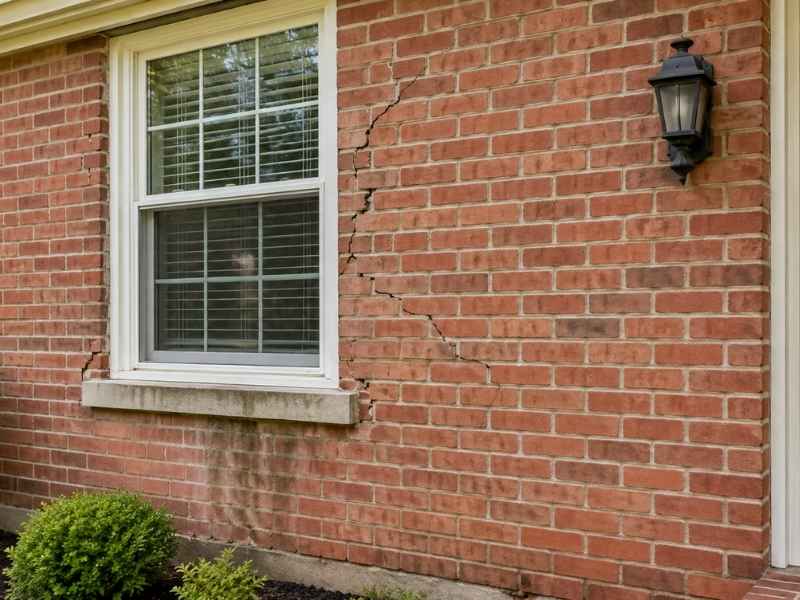
Brick repair around windows and doors is not the same as fixing a plain brick wall. These spots take more stress than the rest of the house. A window or door breaks up the brick pattern, and that break point moves and settles differently than solid brick around it. Small gaps or cracks near a frame can look minor at first. Over time, they let in water and cause bigger problems underneath. This guide covers why these areas need special attention, what signs to look for, how repairs usually get done, and when the damage points to something bigger than a simple fix.
Why Brick Around Window and Door Openings Requires Special Attention
A solid brick wall moves as one piece. A wall with a window or door cut into it does not. The frame, the header above it, and the brick around the edges all shift at slightly different rates. That difference in movement puts stress right at the corners and edges of the opening. Temperature changes make this worse. Brick expands in the heat and shrinks in the cold, and the wood or metal frame inside the opening does the same thing at a different pace. That constant push and pull is why cracks so often start at the corners of windows and doors, not in the middle of a flat wall. A general brick inspection can miss this. These spots need their own close look.
Common Signs of Brick Damage Near Windows and Exterior Doors
Some signs are easy to miss until you know what to check for. Look for small cracks running diagonally from the corners of a window or door. These are one of the first warning signs. Gaps between the brick and the frame are another clue, especially if you can see daylight or feel air moving through them. Check the mortar joints too. Crumbling or missing mortar right around an opening wears out faster than mortar on a flat wall, since it takes more movement over time. Water stains on the brick below a window often mean water is getting in above and running down. Inside the house, peeling paint or a musty smell near a window frame can point to the same problem from the other side.
How Contractors Repair Damaged Bricks Around Masonry Openings
A contractor usually starts by figuring out why the damage happened, not just patching what’s visible. That means checking whether the issue comes from water, movement, or a frame that was never sealed right. Fixing the surface without fixing the cause just means doing the job again in a year or two. Once the cause is clear, damaged mortar gets removed and replaced, a process called repointing. If individual bricks are cracked or crumbling, the contractor removes those bricks and puts in new ones that match the size, color, and texture as closely as possible. Any flashing or sealant around the frame gets checked and replaced if it’s failed. The last step is making sure the repaired section blends in with the rest of the wall, so it doesn’t stand out as a patch job.
Preventing Future Brick Problems Around Frames and Entry Points
Good installation makes a bigger difference than most homeowners realize. Flashing, the thin material placed above and around window and door frames, directs water away from the brick instead of letting it soak in. When flashing is missing or installed wrong, water finds its way behind the brick and causes damage from the inside out. Proper spacing between the frame and the brick also matters, since it gives both materials room to expand and contract without cracking each other. Regular inspections catch small problems before they turn into big ones. Checking the brick around windows and doors once or twice a year, especially after a hard winter, is a simple habit that saves money later. Small cracks caught early cost far less to fix than a wall that’s been leaking for years.
When Brick Damage Around Windows and Doors May Indicate a Larger Masonry Concern
Not all cracks are simple to fix. If cracks show up in more than one spot, or if a crack keeps coming back after repair, that’s a sign the problem goes beyond the brick itself. Diagonal cracks that run wide at one end and stretch across several rows of brick can point to settlement in the foundation. Doors or windows that stick or no longer close properly, paired with brick cracks nearby, often mean the whole wall has shifted, not just the masonry around the opening. In these cases, patching the brick won’t solve anything long term. A professional assessment can figure out whether the movement has stopped or is still happening, and that answer changes what kind of repair actually makes sense.
Frequently Asked Questions
What causes bricks to crack around windows and doors?
Stress builds up at the corners of openings because the frame and the brick move at different rates. Moisture that gets behind the brick, aging mortar, and small amounts of settlement over time all add to the problem. Most cracks near openings come from a mix of these causes, not just one.
Can individual bricks around a window or door be replaced?
Yes, in most cases. A contractor removes the damaged brick and sets in a new one that matches the size and color as closely as possible. This works well when the surrounding brick is still solid and the frame itself isn’t the source of the problem.
How do I know if brick damage near an opening needs professional repair?
Watch for cracks that keep coming back, gaps that let in air or light, or water stains that show up again after cleaning. If a door or window has started sticking along with visible brick cracks, that combination usually means the damage needs a proper evaluation, not a quick patch.
Can damaged brick around windows and doors lead to water problems?
Yes. Cracks and gaps near frames give water a direct path into the wall. Once water gets behind the brick, it can damage insulation, wood framing, and interior finishes long before any of that shows up on the outside. Fixing small cracks early helps stop this before it starts.