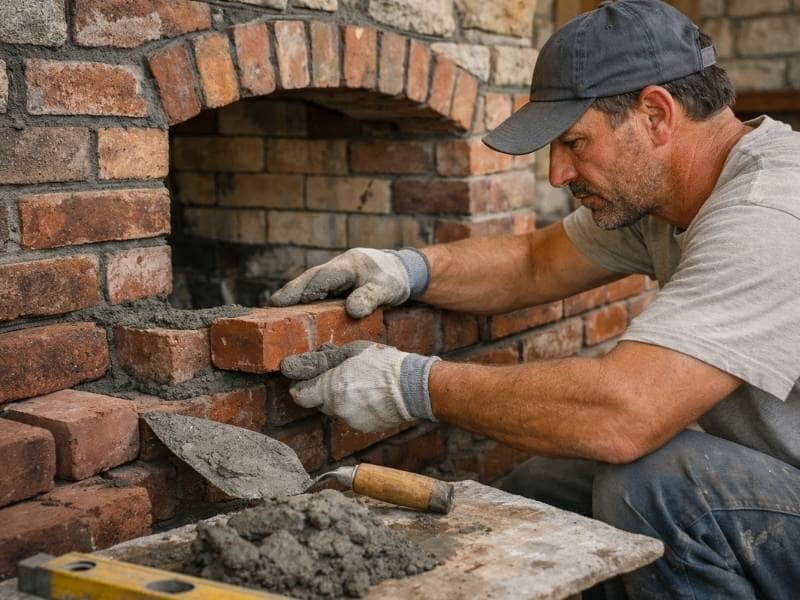
Brick masonry is one of the oldest and most dependable building methods in the world. If you own a home with a brick fireplace, a brick patio, or a brick mailbox, you are already living with this craft every day. But what exactly is brick masonry, and why does it matter for homeowners?
What Is Brick Masonry?
Brick masonry is a construction method where individual bricks are stacked and bonded together using mortar to form a solid, durable structure. The mortar is a thick paste made from cement, sand, and water. When it dries, it holds the bricks tightly in place and keeps moisture from getting in.
The result is a structure that is strong, fire-resistant, and built to last for decades. Brick masonry is used in both new construction and repair work, covering everything from full exterior walls to smaller projects like outdoor fireplaces and retaining walls.
Types of Brick Masonry
Not all brick masonry is the same. The method a brick mason uses depends on the purpose of the structure and the level of strength it needs.
Solid Brick Masonry uses two or more layers of brick, bonded together with mortar. This is the most durable form and is often used in load-bearing walls and chimneys.
Brick Veneer Masonry is a single layer of brick attached to the outside of a structure. Most brick homes you see today use this method. The brick is not load-bearing. It acts as a protective and decorative outer shell.
Reinforced Brick Masonry adds steel rods or mesh inside the brickwork to give it extra strength. This type is common in areas with high wind or earthquake risk.
What Does a Brick Mason Do?
A brick mason is a skilled tradesperson who measures, cuts, and lays bricks to build or repair structures. The work requires precision, physical strength, and a trained eye for detail.
According to the U.S. Bureau of Labor Statistics, there are approximately 294,300 masonry workers employed in the United States as of 2024, with about 20,700 new job openings expected each year through 2034. The median annual wage for a brick mason is $56,600, which reflects the level of skill and training the job requires.
Brick masons typically learn their trade through a formal apprenticeship or years of hands-on experience. When you hire one, you are not just paying for labor. You are paying for the knowledge it takes to build something that will last.
Common Uses of Brick Masonry in Your Home
Brick masonry covers more of your home than you might realize. Here are the most common applications homeowners encounter.
Brick Fireplaces and Hearths
A brick fireplace is one of the most popular uses of brick masonry in the home. The firebox, the surround, and the hearth are all built using heat-resistant bricks and mortar designed to handle extreme temperatures. Brick hearths add warmth, character, and safety to any living space.
Brick Patios and Pavers
Brick patios and brick pavers are a classic choice for outdoor spaces. They are durable, slip-resistant, and easy to repair if a section becomes damaged. A well-laid brick patio can last 25 years or more with proper care.
Brick Mailboxes and Masonry Mailboxes
A brick mailbox or stone mailbox adds curb appeal and a sense of permanence to your property. Masonry mailboxes are far more durable than wood or metal posts and can withstand years of weather and impact without losing their appearance.
Retaining Walls
Brick retaining walls are used to hold back soil on sloped properties and create level areas for landscaping or outdoor living. They need proper drainage and a solid foundation to perform well over time.
Outdoor Kitchens and Outdoor Fireplaces
Brick and stone are the materials of choice for outdoor kitchens and outdoor fireplaces. They handle heat well, stand up to the elements, and give outdoor spaces a finished, high-quality look that other materials cannot match.
Brick Masonry vs. Stone Masonry: Key Differences
| Feature | Brick Masonry | Stone Masonry |
| Material | Manufactured clay or concrete units | Natural or cut stone |
| Cost | Generally lower | Generally higher |
| Appearance | Uniform, classic look | Varied, natural look |
| Durability | 100+ years with care | 100+ years with care |
| Best For | Walls, patios, fireplaces, mailboxes | Feature walls, hearths, outdoor kitchens |
Both methods are excellent long-term investments. The right choice depends on your budget, the look you want, and the specific project.
How Long Does Brick Masonry Last?
Brick masonry is one of the longest-lasting building materials available to homeowners. A properly built brick structure can last 100 years or more with minimal upkeep. The mortar between the bricks is the first thing to wear down over time, and it typically needs to be refreshed every 25 to 50 years through a process called tuckpointing or repointing.
The bricks themselves are highly resistant to fire, moisture, and temperature changes. This is one reason brick homes often carry higher resale values compared to homes built with other exterior materials.
How Much Does Brick Masonry Cost?
The cost of brick masonry work varies depending on the type of project, the materials used, and local labor rates.
As a general guide:
- Brick installation costs between $10 and $45 per square foot, with most homeowners paying an average of $25 per square foot.
- A full brick wall averages around $5,309, with most projects falling between $2,210 and $8,535.
- Brick repair work typically costs $500 to $2,500, depending on the size and severity of the damage.
These are national averages. Your actual cost will depend on your location and the scope of your project. Getting a quote from a licensed brick mason is always the best first step.
How to Find a Qualified Brick Mason
Not every contractor who offers masonry work has the training to do it well. Here is what to look for when hiring a brick mason.
- Check for licensing and insurance. A qualified mason should be licensed in your state and carry liability insurance. This protects you if something goes wrong during the project.
- Ask to see past work. Reputable masons are happy to share photos or references from completed projects similar to yours.
- Get more than one quote. Comparing at least two or three bids gives you a realistic sense of fair pricing for your area.
- Ask about mortar matching. If you are repairing existing brickwork, the new mortar needs to match the color and texture of the old mortar. This is a small detail that makes a big difference in the finished appearance.