Stone Fireplace Proportions for Open Living Rooms

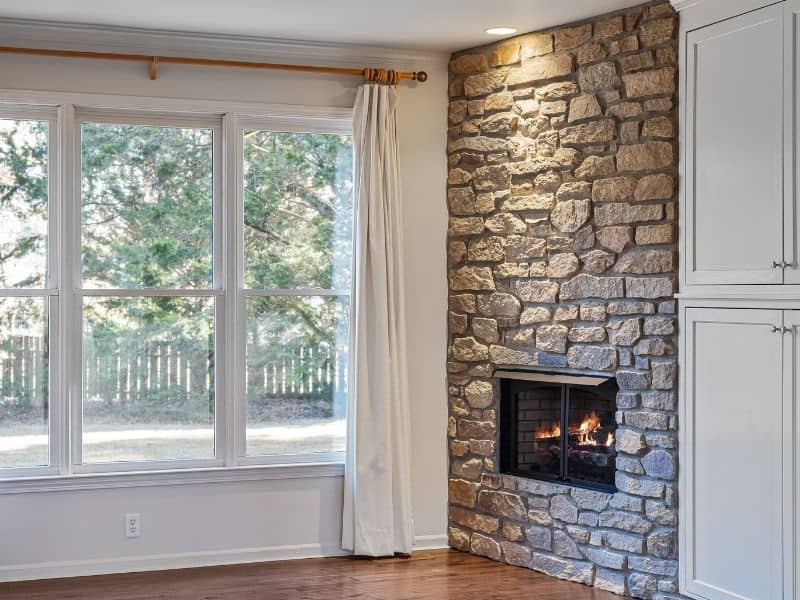
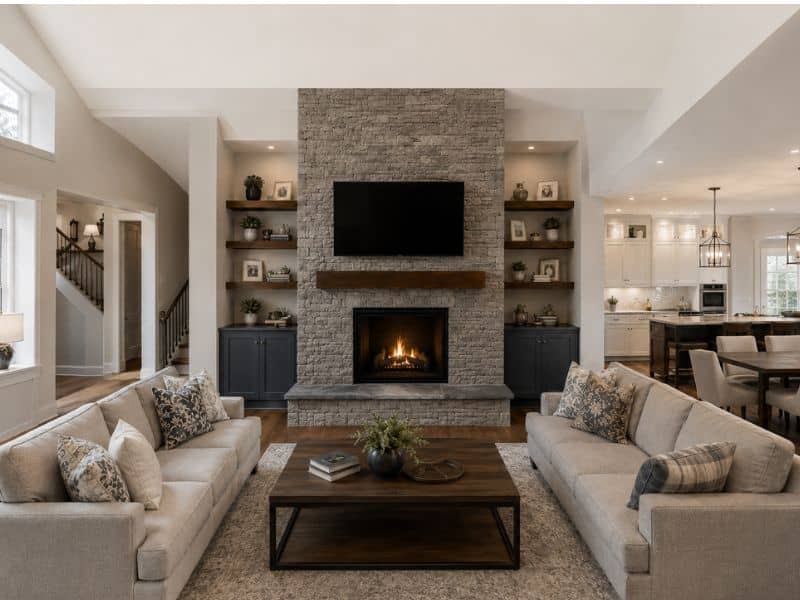
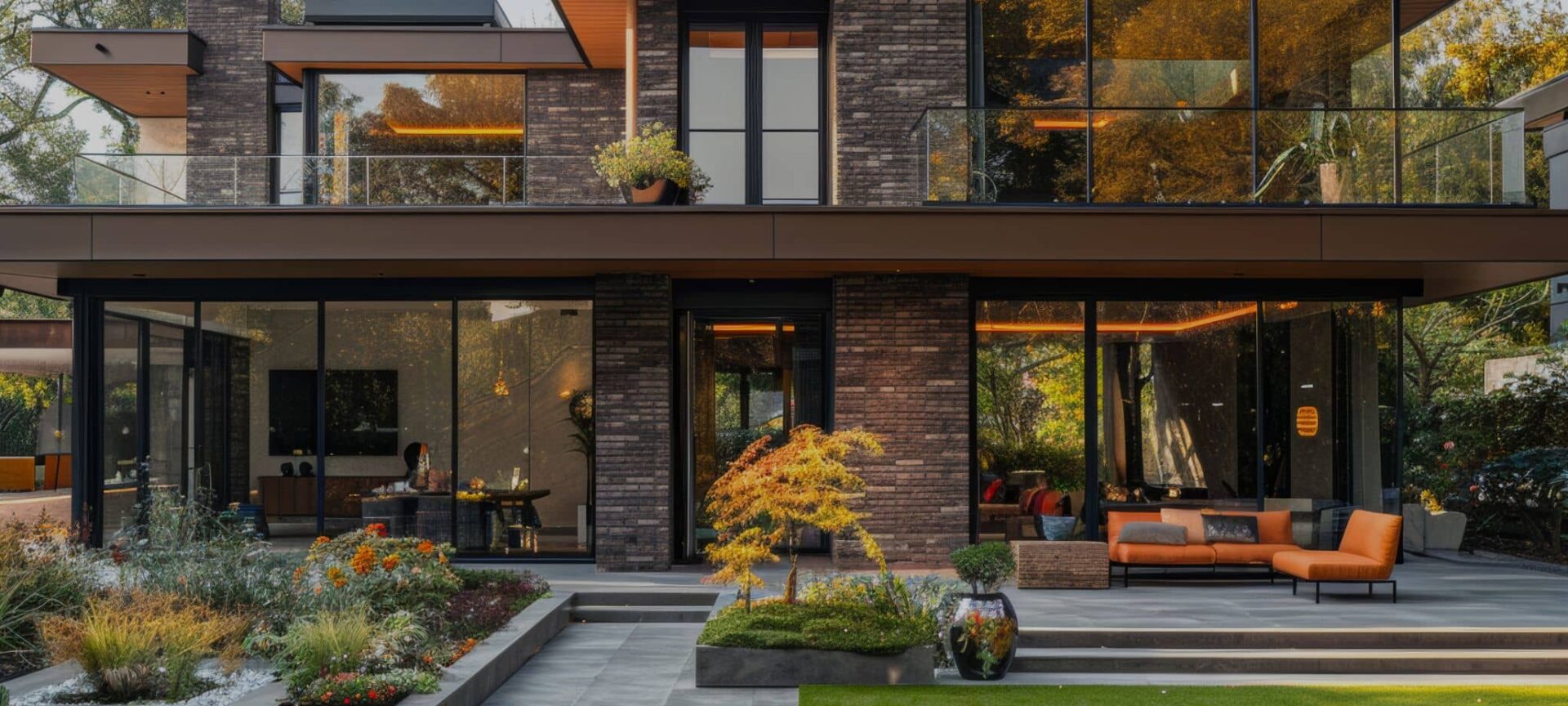
Stone fireplace proportioned for an open living room in Birmingham, Alabama, with a balanced firebox, mantel, television, and surrounding furniture.

A stone fireplace can turn a plain living room into the spot everyone drifts toward. But in an open floor plan, getting the size right is trickier than picking a design you like. Too small, and the fireplace looks lost on a big wall. Too large, and it crowds everything else in the room. Homeowners in Coral Springs, Florida often deal with open layouts that connect the living room to the kitchen and dining area, so proportion matters even more here than in a closed-off room. Here’s how width, height, firebox size, furniture placement, and finishing details work together to get the scale right.

Match the Stone Fireplace Width to the Main Living Area

It’s tempting to size a fireplace to fill an entire open wall. Don’t do that. The width should be scaled to the main seating zone, not the full floor plan. Look at where the sofa and chairs actually sit, then measure that space instead of the whole room.

Wall length matters, but so does what’s happening around it. A narrow fireplace can look right on a short wall next to a hallway opening. A wider one, sometimes stretched with stonework running along both sides of the firebox, fits better on a long wall that has no doors or windows breaking it up. Traffic paths count too. If people constantly walk in front of the fireplace to get to another room, a bulky design will feel like an obstacle instead of a feature.

Balance Fireplace Height With the Ceiling Line

Ceiling height changes everything about how a stone fireplace should be built. In a room with a standard eight or nine-foot ceiling, floor-to-ceiling stone can look heavy and cramped. Stopping the stone a foot or two below the ceiling, then finishing the rest of the wall in drywall or wood, usually looks more balanced.                                                             

Vaulted and double-height ceilings are a different story. When the ceiling climbs well above ten feet, a short fireplace can look like it’s shrinking into the wall. Full-height stone, sometimes reaching a peak or following the slope of the roofline, gives the eye something to follow all the way up. The goal is a fireplace that reads as one connected shape with the ceiling, not something stuck onto the wall as an afterthought.

Keep the Firebox Proportional to the Stone Surround

The firebox is the part people actually notice first, so its size compared to the stone around it has to feel right. A small insert surrounded by a huge amount of stone can look swallowed up, almost like an afterthought stuck in the middle of a big rock wall. On the other hand, an oversized firebox with only a thin border of stone can leave the whole structure looking flimsy.

There’s no single ratio that works for every room, but the stonework should feel substantial without making the opening seem like a small square cut into a slab. Measuring both pieces against each other, not just against the wall, helps avoid this mistake before construction starts.

Account for Furniture Placement and Viewing Angles

A fireplace in an open living room gets seen from more angles than one in a closed den. Sofa placement matters, but so do walkways, dining tables, and the sightline from the kitchen. A design that looks well-proportioned from the couch might feel oddly narrow or oddly wide when viewed from the kitchen island fifteen feet away.

Walking through the space at different points, not just sitting in the main seating spot, gives a better sense of how the fireplace reads from angles a homeowner will actually experience every day. Furniture layout also affects perceived width. A sectional sofa placed close to the fireplace can make it look larger than it really is, while a small loveseat set far back can make the same fireplace look oversized by comparison.

Coordinate the Mantel and Television With the Masonry Scale

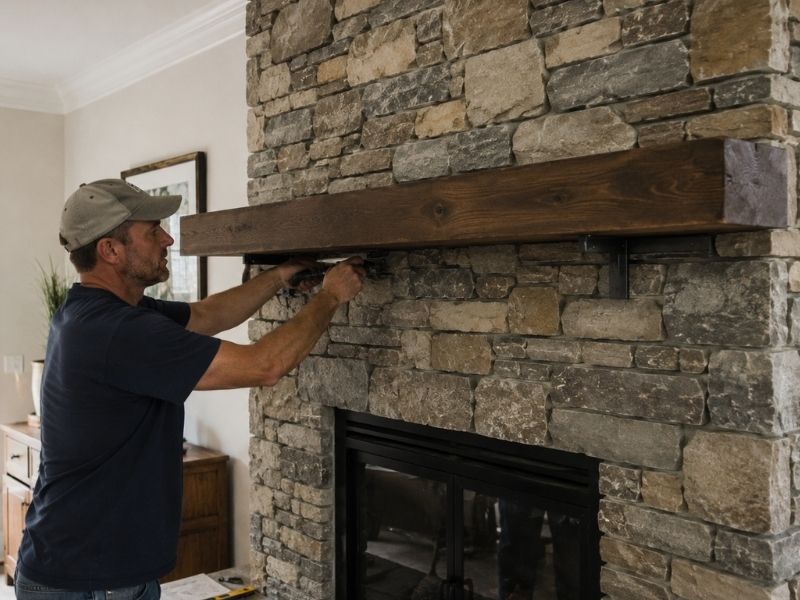
A mantel changes how a fireplace reads, even when the stone dimensions stay the same. A thick, deep mantel adds visual weight and can help balance a tall firebox. A thin mantel on a very wide fireplace can look undersized next to all that stone.

Televisions and artwork add another layer. Mounting a TV above the firebox works, but the spacing above and below it needs enough breathing room so the upper section doesn’t feel crowded or oddly empty. Too little space between the firebox and the TV makes the wall feel stacked and tight. Too much empty stone above the mantel with nothing on it can leave the top half of the fireplace looking bare compared to the busier area near the firebox. A recessed niche for a TV or display shelf is one way to keep the masonry looking intentional instead of accidental.

Frequently Asked Questions

How wide should a stone fireplace be in an open living room?

There’s no single correct width. It depends on the wall length, the size of the seating area, the firebox dimensions, how much circulation space is needed around it, and the overall scale of the room.

Should stone extend to the ceiling in an open-concept room?

It depends on ceiling height and shape. Standard ceilings often look better with stone that stops short of the top, while vaulted or double-height ceilings usually call for full-height stone to keep the proportions balanced.

Can a stone fireplace be too large for a living room?

Yes. A fireplace that’s too wide, too tall, or built with masonry that’s too deep can overwhelm the furniture around it, block walkways, and make the remaining wall space feel squeezed.

How large should the firebox be compared with the surround?

The opening should feel substantial within the stone face. If the surround is too wide, the firebox looks like an afterthought. If the surround is too narrow, the whole structure looks thin and unstable.

Should an open living room fireplace be centered on the wall?

Not always. Windows, doors, built-ins, and sightlines from the kitchen can all support an off-center placement, as long as the rest of the composition still feels balanced when viewed from the main living space.

Fireplace Repair Planning for Older Homes

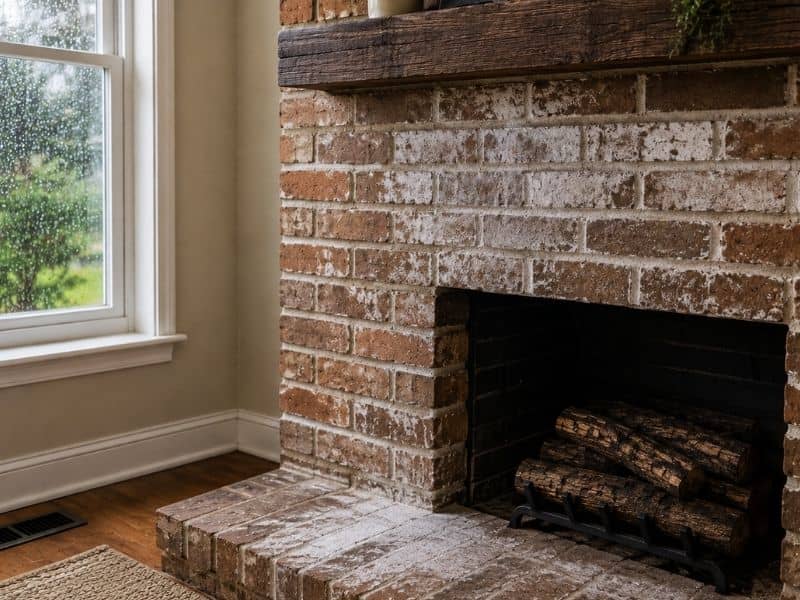
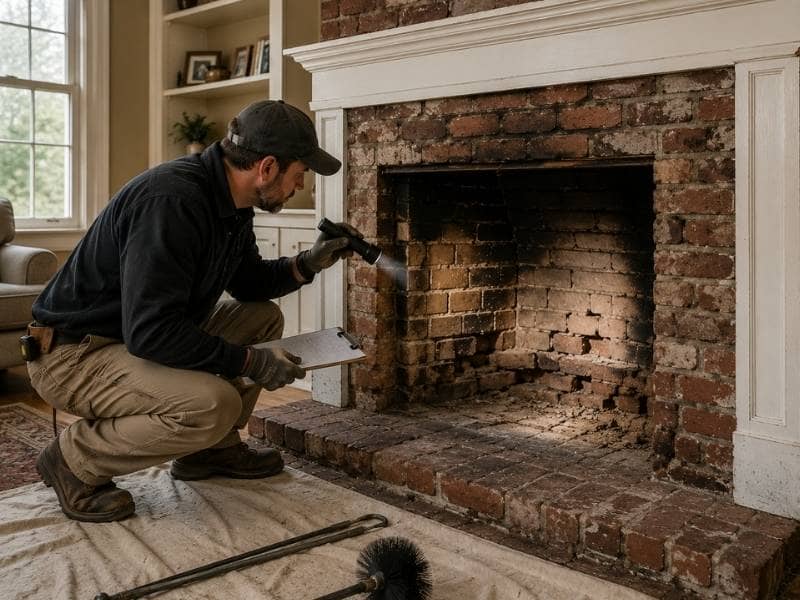
Fireplace repair planning for older homes with a professional inspecting cracked firebrick and deteriorated mortar

Fireplace repair in older homes often requires more than fixing visible damage. Years of regular use can leave cracked masonry, deteriorated mortar joints, damaged firebrick, or creosote buildup that should be evaluated before repairs begin. A planned approach helps assess the condition of the surrounding masonry, firebox, and venting components while identifying repairs that should be completed before cosmetic improvements. Careful planning allows property owners to address existing issues more effectively and reduce the likelihood of unexpected repairs during the renovation process. 

Start With a Full Inspection

Good fireplace repair starts by learning what’s actually wrong. An older fireplace can hide problems inside the firebox, the chimney and the structure behind the brick. A thorough inspection checks all of these, not just the visible face. This is the step that separates a real repair from a cosmetic cover-up, and it’s the one people most often skip.

The inspection should cover the whole system. That means the firebox where the fire burns, the flue that carries smoke up and the chimney outside. Problems in one part often point to trouble in another. A cracked flue, for example, can let heat reach wood framing, which is a serious fire hazard. A leaning chimney can pull at the wall it’s attached to. Seeing the full picture lets you plan a repair that fixes causes, not just symptoms, so the same problems don’t come back.

Common Problems in Older Fireplaces

Older fireplaces tend to share a set of familiar problems. Mortar breaks down over time, leaving joints that crumble and gaps that let heat and gases escape where they shouldn’t. This is one of the most common repairs, and one of the most important for safety. Once mortar starts failing, water gets in and speeds up the damage.

The firebox itself takes heavy heat and often shows cracks or damaged firebrick. The flue liner can crack or wear away, which is a safety issue because the liner keeps heat and gases inside the chimney and away from the house. Outside, the chimney’s top and crown often crack and let water in. Water damage then spreads, loosening brick and mortar from the top down. A chimney frequently fails from its cap downward, so the top deserves close attention. Knowing these patterns helps you plan for what an old fireplace likely needs.

Repair or Rebuild

A key planning choice is whether to repair a part or rebuild it. Small problems usually call for targeted repair. Repointing bad mortar, replacing a few firebricks or fixing the crown can restore a fireplace without major work. These fixes make sense when the overall structure is sound and the damage is contained.

Bigger damage sometimes tips the scale toward rebuilding. A chimney that leans, has widespread cracking or has a badly failed liner may cost more to patch repeatedly than to rebuild once. Throwing small repairs at a failing chimney can turn into a cycle that never really fixes it. An honest assessment weighs the cost of ongoing repairs against a rebuild that solves the problem for good. Choosing right here saves money over time and gives you a fireplace that lasts instead of one that keeps needing attention.

Putting Repairs in the Right Order

Fireplace repairs work best in a sensible order. Safety and water problems come first. A cracked flue or a chimney letting water in should be handled before anything cosmetic, because these issues spread and get worse the longer they sit. Fixing them early stops further damage and keeps the fireplace safe to use.

Structure comes before surface. There’s no point in refacing a fireplace that still has a failing firebox or a loose chimney behind the new look. Repair the working parts first, then finish with the visible details. This order keeps you from paying twice, once to make it pretty and again to fix what you covered up. It also means the fireplace is actually safe before anyone builds a fire in it, which is the whole point.

Budgeting and Hiring for the Repair

A clear inspection and repair plan make budgeting far easier. Once you know the full scope, you can get accurate bids instead of vague estimates. Group the work by priority, so you can handle the urgent safety items now and schedule the rest as money allows. This keeps a big repair from becoming one overwhelming bill and lets you spread the cost sensibly.

Who does the work matters as much as what gets done. Older fireplaces need someone who understands historic masonry and current safety rules, not a general handyman. A qualified mason or chimney professional can spot problems others miss and repair them to last. Ask about experience with old fireplaces and check that the work will meet today’s safety standards. The right pro costs more than a quick patch, but the work holds up and keeps your building safe.

Frequently Asked Questions

How do I know if my old fireplace needs repair?

Look for crumbling mortar, cracks in the firebox, water stains and a chimney that sheds bits of brick or crown. A professional inspection confirms what’s wrong inside the flue and structure, where the most serious problems hide from view.

What are the most common repairs in older fireplaces?

Repointing failed mortar, replacing cracked firebricks, fixing or relining the flue and repairing the chimney crown are the usual jobs. Mortar and water damage lead the list in older homes, since both worsen over decades of use.

Is it better to repair or rebuild an old fireplace?

It depends on the extent of the damage. Small, contained problems are worth repairing. Widespread cracking, a leaning chimney or a badly failed liner may make a rebuild the cheaper long-term choice, since endless patching adds up.

Can I use an old fireplace before repairing it?

You shouldn’t, not until it’s inspected. Hidden cracks in the flue or firebox can let heat and gases reach places they shouldn’t, which is a fire and safety risk. Have it checked before you light a fire in it.

Who should repair an older fireplace?

A qualified mason or chimney professional. Older fireplaces need someone who understands historic masonry and current safety rules. The right pro can spot problems a general handyman would miss and repair them to last.